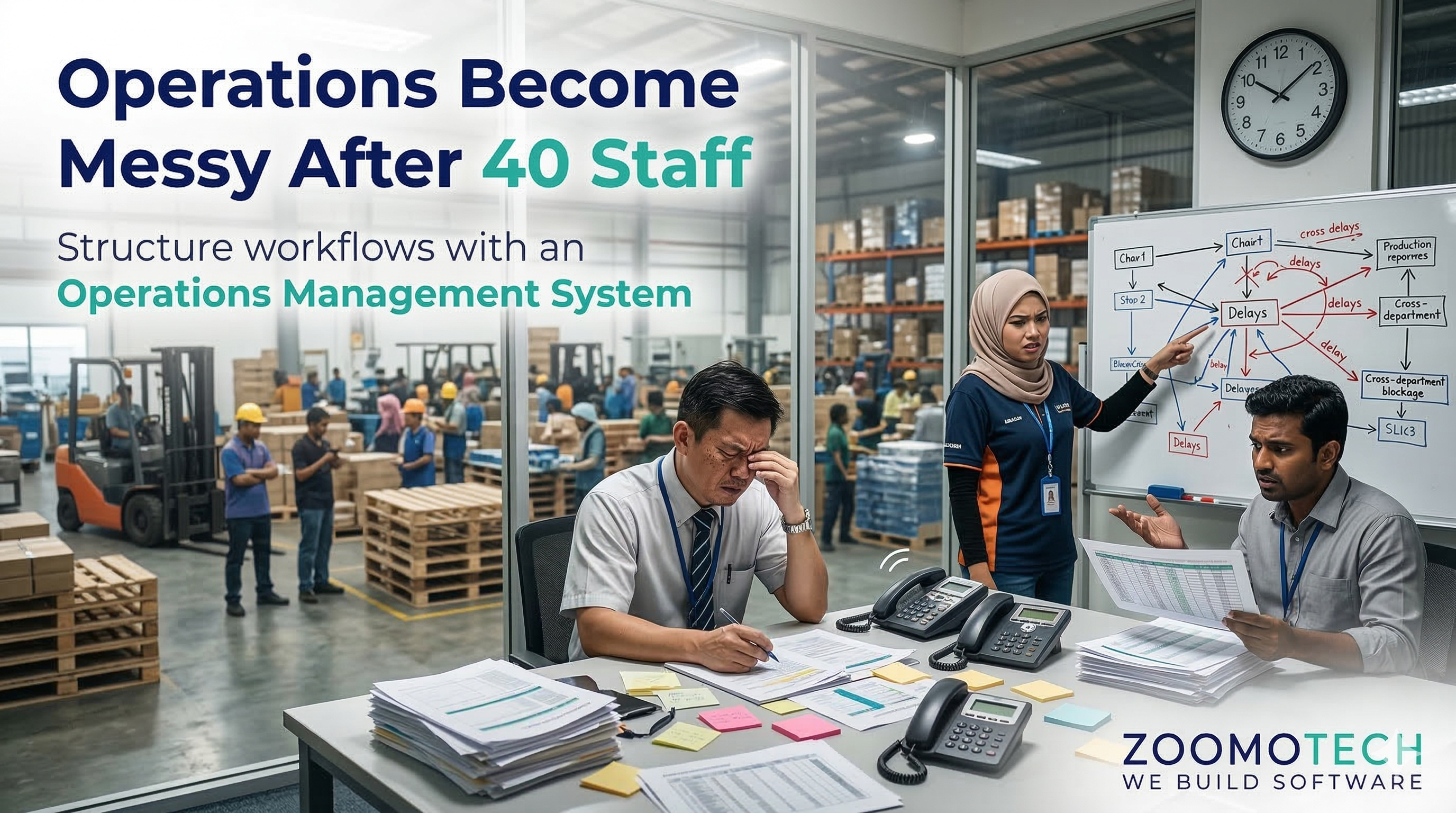
Business looks stronger, yet operations feel harder. Many Malaysian SMEs grew using manual coordination: Excel files, WhatsApp updates, and informal approvals. What worked at 20 staff begins to strain at 60. Reports arrive later, decisions take longer, and clarity starts fading. An Operations Management System often becomes relevant when growth quietly outpaces operational structure.
What an Operations Management System Solves for Growing SMEs?
An Operations Management System helps growing SMEs organise operational workflows and improve operations visibility for management by reducing fragmented coordination and providing clearer process tracking across departments.
- Centralises workflows across departments
- Improves operations visibility for management
- Reduces reliance on manual coordination
- Tracks operational progress in real time
- Supports operational scaling without extra admin work
Manual Coordination Becomes Harder After Thirty Staff
In the early years, many SMEs coordinate work through conversations, shared files, and quick approvals on WhatsApp. This approach works well when teams are small. Once a company passes 30 to 40 staffs, operations spread across production, purchasing, logistics, inventory, and finance. Each activity requires updates from multiple people.
Coordination gradually becomes fragmented. Operational updates depend on individuals remembering to share information, and different departments maintain their own records. Owners still receive reports, but visibility becomes delayed or incomplete. As complexity grows, management clarity weakens, even though the business itself is expanding.
Operational Complexity Increases Faster Than Management Visibility
As businesses grow, each department quietly adds its own processes. Production schedules, purchasing requests, delivery coordination, inventory checks, and finance approvals all introduce new operational steps, an operational challenge recognised in global process management standards such as ISO 9001 quality management principles. Each step creates another point that needs tracking and communication.
Complexity rarely arrives suddenly. It builds gradually as workflows expand. Many SME owners underestimate this shift because operations still appear manageable day to day, especially when workflows still rely on tools like Excel for manufacturing operations that were never designed for complex production coordination. Over time, however, management awareness begins to fall behind the real level of operational activity happening inside the company.
Informal Tracking Methods Gradually Lose Reliability
Early-stage companies often rely on informal tracking methods and personal coordination. Staff update spreadsheets, send progress through WhatsApp, or verbally confirm task completion – an approach that often leads to the kind of reporting issues discussed in Excel management reports hiding real business problems. These approaches work when teams are small and communication lines remain short.
As departments grow, information becomes scattered across multiple records. Purchasing may maintain one file while inventory and production tracks another. Logistics keeps its own updates. Small gaps begin appearing between teams. Over time, coordination slows because managers must manually verify which information is actually correct.

Delayed Information Creates Daily Operational Friction
In many SMEs, operational reports arrive after decisions have already been made. Production managers often react to yesterday’s production numbers. Purchasing teams confirm shortages only after delays appear on the shop floor.
These delays hide early warning signals. Small issues such as material shortages or schedule changes remain unnoticed until they affect delivery timelines. Managers begin relying on assumptions rather than verified information. Over time, daily operations require more troubleshooting simply because reliable updates are not immediately visible.
Operational Bottlenecks Start Appearing Across Departments
Operational bottlenecks rarely originate from a single department. A production delay may begin with a late material delivery. Inventory gaps can quietly disrupt manufacturing schedules. Delivery teams may only discover problems when customer shipments are already affected.
These issues become harder to trace when coordination depends on manual updates. Small delays accumulate across departments, gradually affecting the entire workflow. As inefficiencies compound, teams spend more time resolving problems instead of focusing on productive work.
Operations Management System Restores Organisational Visibility
As operations become more complex, many SMEs begin organising workflow information through a structured operational system. Instead of relying on scattered updates, operational data flows into one place where departments can track progress together.
An Operations Management System helps managers see process status across departments in real time. Bottlenecks become aware earlier, allowing faster responses. When workflow information becomes structured and visible, decision making improves because managers rely on actual operational data rather than fragmented updates.
Growth Without Visibility Gradually Reduces Leadership Control
As operational clarity weakens, owners begin spending more time resolving confusion between departments. Production asks purchasing for updates. Logistics checks inventory availability. Managers often gather explanations from different teams before decisions can be made.
Leadership gradually shifts from strategy to troubleshooting, especially when critical operational knowledge remains concentrated in a few experienced staff. Instead of reviewing structured operational data, managers depend on staff interpretations of events. Strategic decisions slow down because reliable information is harder to confirm. Over time, business growth begins to feel heavier rather than easier, even though demand and revenue continue increasing.
Structure Must Evolve Together With Business Growth
Growth requires structure, not disruption. As operations expand, businesses benefit from stabilising workflows before scaling further. Systems should reflect how work already happens inside the company. A phased approach, guided by clarity before commitment and careful risk control, allows organisations to strengthen operational structure without creating unnecessary disruption.
Clarity Is the First Step Toward Operational Stability
Growth often exposes operational limits that remained hidden when teams were smaller. As departments expand, coordination becomes harder and visibility weakens. Structured workflows help convert daily operational complexity into clearer and more reliable processes. An Operations Management System allows businesses to regain visibility without disrupting existing operations. The real objective is not adopting new technology, but restoring management control as the organisation continues to grow.
If some of these situations feel familiar, a short conversation may help clarify the next step. Many SME owners simply want a second opinion on their operational structure before making any decision. If useful, feel free to reach out via WhatsApp or Email for a short discussion or to explore possible options.
—
Ning
Founder, Zoomo Tech