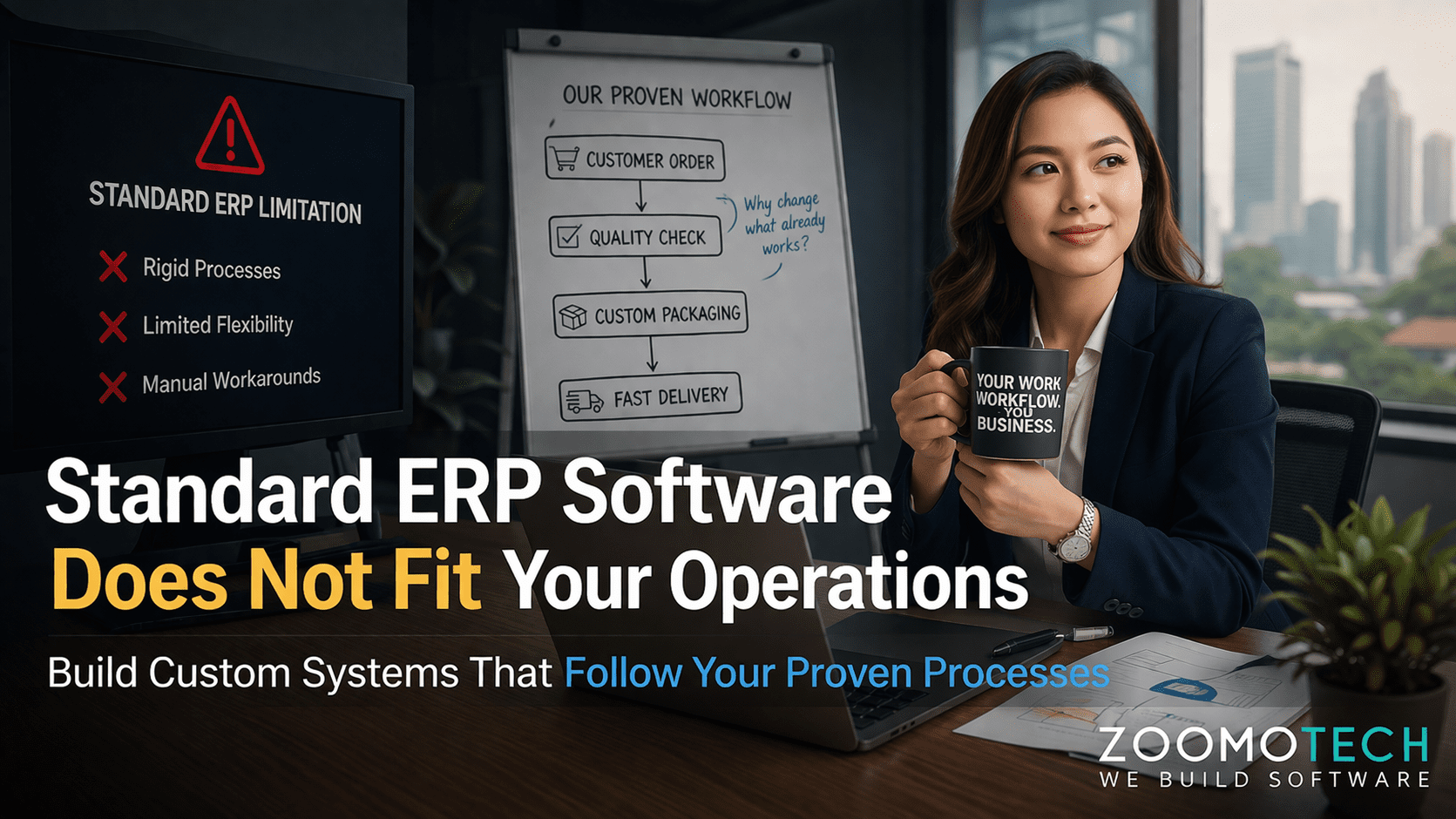
ERP was supposed to simplify operations. But in many Malaysian SMEs, teams end up adjusting their daily work to fit the system instead. Standard ERP Software starts to feel “not suitable”, reports don’t match actual work, and frustration builds across departments while management assumes it is a staff issue.
Why Standard ERP Software Fails to Fit SME Workflows?
Standard ERP Software often fails because it is built for common processes, not the way your business actually runs, causing teams to adjust operations instead of improving them
- Designed for general industry workflows
- Forces fixed process structures
- Customisation becomes costly
- Workarounds happen outside system
- Misfit grows as operations expand
Standard ERP Software Is Built for Common Processes
ERP vendors are not wrong in their design approach. Most systems are designed for mass adoption across industries, based on general “best practice” processes that work reasonably well in standard environments. This allows faster deployment and lower cost for businesses with simpler operations.
The gap appears when your company develops its own working style over time. Daily operations start to include exceptions, adjustments, and internal practices that no longer fit standard structures. This is where the misfit begins, not because the system is poor, but because your business has evolved beyond it.
Unique Workflows Develop as Business Grows Over Time
Most workflows are developed through daily decisions, not planning. Over the years, your team adjusts processes based on customer demands, supplier behaviour, and internal constraints. These adjustments are practical, not documented, but they become part of how the business runs.
Sales may handle special pricing differently, production may prioritise urgent jobs, and accounts may adjust billing timing. Each department builds its own way of working. Over time, these variations form a structure that no standard system can fully reflect.
System Limitations Force Teams to Create Manual Workarounds
When the system cannot reflect daily operations, people will find another way. Staff begin tracking information outside the ERP, using spreadsheets, WhatsApp, or manual notes to fill the gaps, which often leads back to manual business operations that quietly increase cost over time. These are not mistakes, but necessary adjustments to keep operations moving.
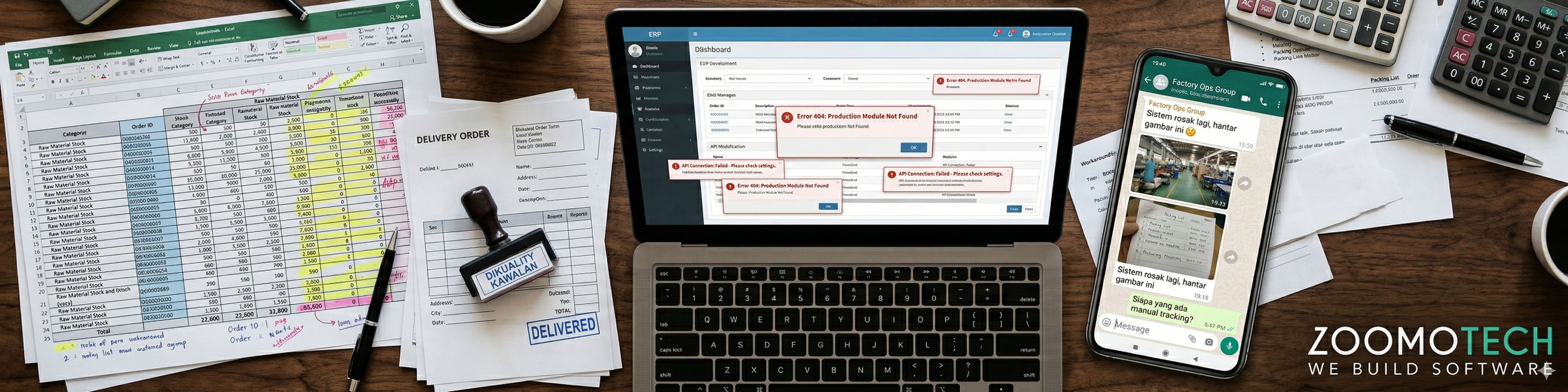
You may start seeing duplicated data, approvals handled outside the system, and reports compiled manually again. The system becomes only one part of the process instead of the centre. Over time, this reduces the original purpose of having a system in place.
Data Becomes Inconsistent Across Departments Over Time
Once work happens across multiple tools or locations, data starts to differ. Sales, operations, and accounts may each have slightly different numbers based on timing and interpretation. Updates are not synchronised, and small differences begin to appear in daily reports again.
To manage this, teams spend time checking, reconciling, and confirming data manually. This becomes a routine task rather than an exception. Eventually, management begins to question which number is correct, and confidence in reporting reduces quietly, similar to how Excel management reports can hide real business problems.
Standard ERP Software Restricts Operational Flexibility Gradually
As business needs change, system limitations become more obvious. Handling special cases or exceptions often requires additional steps, workarounds, or external tools. Changes to the system often depend on vendors or involve additional cost and time.
Instead of the system adapting to the business, teams adjust their operations to fit the system. This slows down response to customer needs and limits how quickly the business can adapt. Over time, operational flexibility becomes constrained by system structure.
Custom ERP For Malaysian SME Focuses on Workflow Fit
A good system should reflect how your business actually operates. Custom ERP for Malaysian SME is built around real workflows, including exceptions and variations that happen daily. It does not assume standard processes but starts from understanding your operations.
This allows different departments to align within one structured system while still handling practical needs. As the business grows, the system can adjust accordingly. The focus is not on features, but on making sure the system fits the way your team already works.
Management Control Reduces When Systems Do Not Fit
When systems do not reflect actual operations, management starts working with incomplete information. Reports may look structured, but delays and inconsistencies make it difficult to understand the actual situation on the ground. Simple questions such as order status or production progress require follow-up with multiple people.
Decisions become reactive instead of planned, often based on explanations rather than data. As the company grows, this gap increases, and reliance on key staff becomes higher. What started as an operational issue gradually turns into a business risk that affects control, planning, and long-term stability, especially when growth begins to expose deeper operational limitations across departments.
Systems Should Follow Business Not Force Change
System decisions do not need to be rushed. A more stable approach is to understand how the business actually runs, then improve step by step. Clarity before commitment helps reduce unnecessary changes, while a phased approach allows adjustments with lower risk as operations continue without disruption.
Start with One Workflow Before Scaling Your System
You do not need to replace everything at once to move forward. In most cases, a better approach is to identify one workflow that causes daily friction, then stabilise it before expanding further. This reduces resistance from the team and allows gradual improvement without disrupting operations. When Standard ERP Software does not fit, a step-by-step approach helps rebuild structure with lower risk and clearer direction over time.
If this situation feels familiar, it may be worth having a short discussion first. You can reach out via WhatsApp or Email to share your current workflow challenges, and we can look at it together without commitment, even if just to get a second opinion. Sometimes, a short conversation is enough to clarify the next step.
—
Ning
Founder, Zoomo Tech