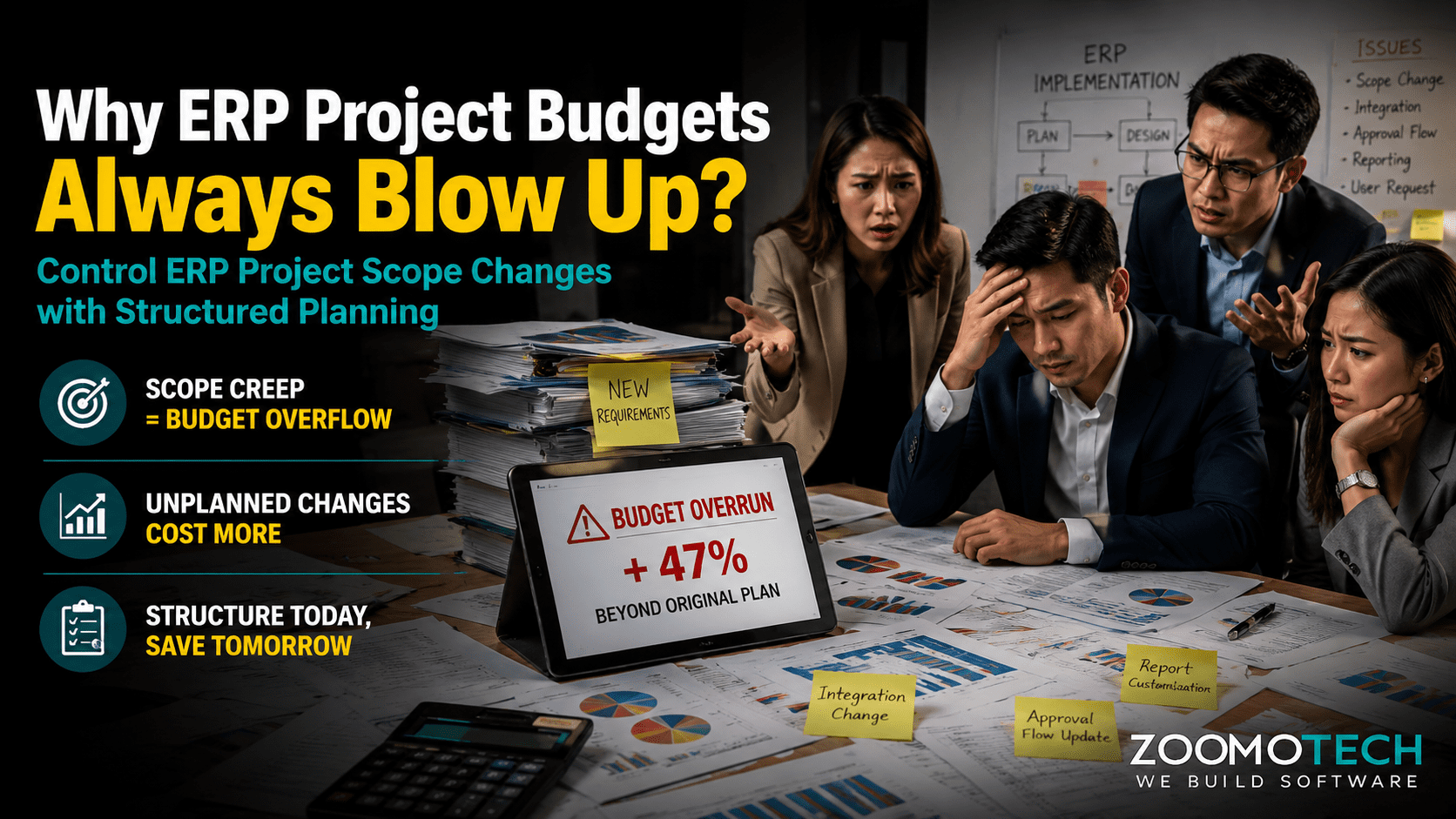
Many SMEs notice this quietly. The ERP demo looked manageable, the quotation seemed reasonable, and everyone agreed during early meetings. ERP Project Scope Changes often begin once development starts and actual workflows, approval exceptions, branch differences, and reporting habits become clearer. Budget pressure usually grows slowly instead of arriving all at once.
What Causes ERP Project Scope Changes in Malaysia?
ERP Project Scope Changes usually happen when actual operational workflows only become clear after implementation begins.
- Different departments follow different working methods
- Hidden approval layers increase development effort
- Requirement gaps between staff and vendors create repeated revisions
- Unofficial processes surface only during testing
- Weak early workflow discovery increases budget pressure
Most SMEs Underestimate Daily Workflow Variations
This situation is very common in growing SMEs. A warehouse supervisor may use a different stock checking method from another branch, while finance staff manually adjust reports before management meetings. Over time, these small operational differences become normal working habits even though they were never formally documented.
As companies grow beyond 30 or 50 staff, and transition through different SME development phases in Malaysia, manual exceptions usually increase together with business complexity. Management discussions often stay at reporting level, while actual operations still depend on approval shortcuts, informal coordination, and experienced staff. These realities normally only surface after ERP implementation work has already started.
ERP Project Scope Changes Expand After Department Discussions
The first round of discussions usually looks manageable. Sales wants quotation tracking, finance focuses on billing control, while warehouse and production ask for stock accuracy and job progress monitoring. During early meetings, these requests may appear unrelated and relatively small.
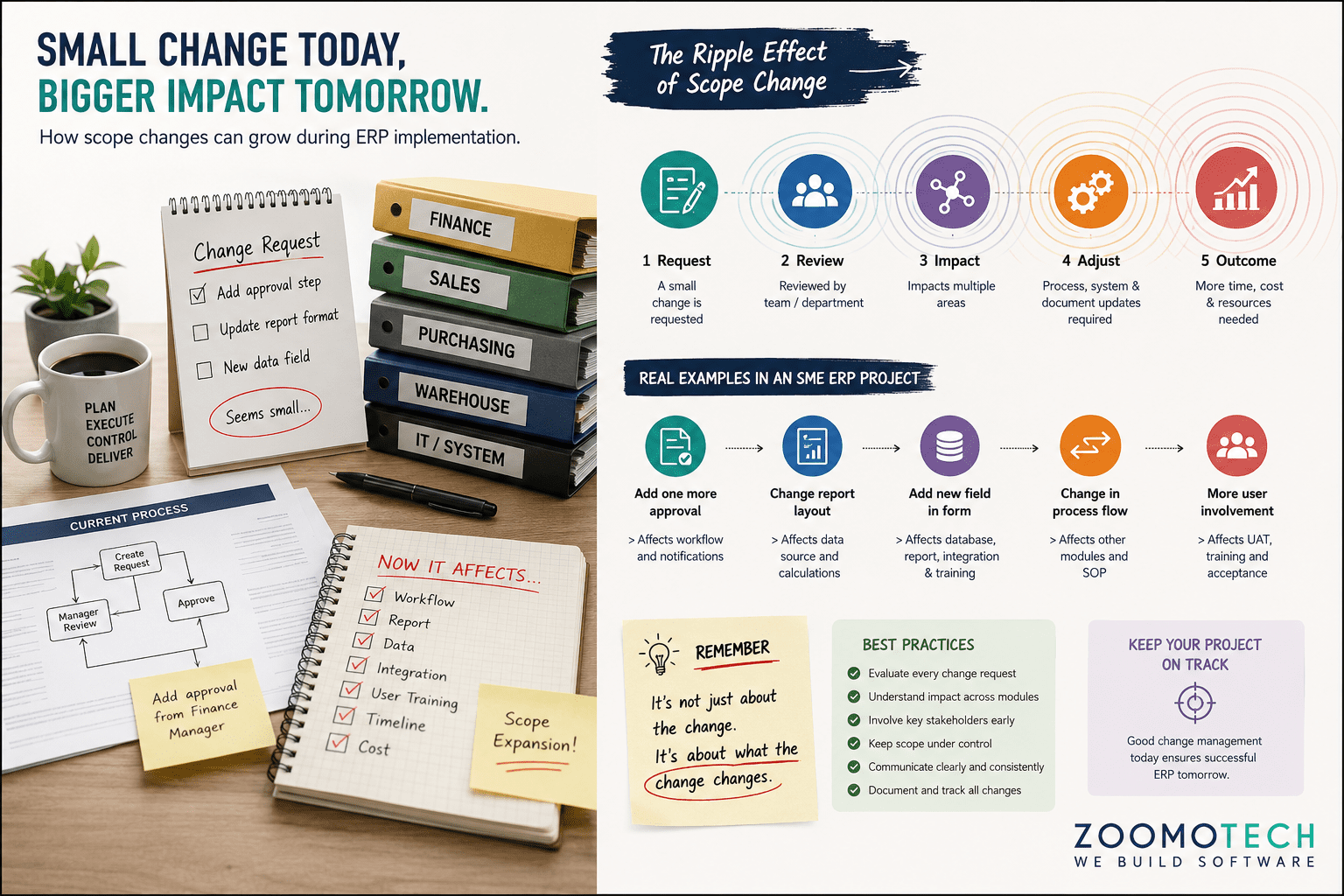
The situation usually changes during user testing. Managers suddenly notice approval gaps, reporting differences, and missing operational steps that were never discussed earlier. ERP Project Scope Changes often expand at this stage because departments only realise their actual needs after seeing workflows inside a working system. Small feature requests gradually affect integrations, reporting flow, and overall implementation effort, especially when companies already face manual reporting limitations.
Custom Approval Logic Increases Development Effort Quietly
Approval processes often become more complicated than expected. A purchasing approval may depend on amount, branch, supplier category, or project type. Finance may require additional checks, while directors still want flexibility for urgent operational decisions.
These approval habits usually developed over many years and are deeply connected to company culture. When software tries to standardise these decisions, exception handling starts appearing everywhere. Multi-branch businesses face even more complications because each location may follow slightly different approval practices. Testing effort also increases because every approval layer affects reports, audit records, and operational accountability.
Third Party Integration Changes Original Project Direction
Many SMEs already depend on older systems before starting ERP implementation. Accounting software, weighing machines, barcode scanners, GPS tracking, or customer portals may already support daily operations. During planning discussions, these integrations often sound straightforward until operational and technical limitations start appearing.
Some systems cannot exchange data properly, while others contain inconsistent records accumulated over many years, especially in businesses still relying on manual business operations across departments. External API restrictions, outdated databases, and incomplete historical data frequently force unexpected restructuring work. Hardware integration introduces another coordination layer because project timelines now depend on third-party vendors, device compatibility, and live operational testing.
Unclear Decision Ownership Slows ERP Implementation Progress
ERP implementation becomes difficult when decision ownership is unclear. Operations managers, finance leaders, directors, and department heads may all have different opinions about workflow priorities. One team wants stricter control, while another prefers operational flexibility to maintain daily speed.
As implementation pressure increases, scope discussions can become emotional instead of operational. Staff resistance may also influence requirement changes because people worry about monitoring, workload, or process adjustments. When management alignment happens too slowly, development teams repeatedly revise workflows based on changing instructions. Over time, repeated rework increases together with budget pressure and project fatigue.
Fixed Price Expectations Break During Operational Discovery
Many SME owners naturally expect software pricing to behave like equipment purchasing. The quotation is expected to stay fixed as long as the original discussion remains unchanged. However, operational discovery usually continues throughout the implementation itself.
Complex workflows are difficult to fully predict during early meetings because many details only surface after users start testing actual screens and reports. Scope freeze discussions therefore become commercially sensitive once both parties realise additional work is required. Budget stress usually increases when expectations are built around pricing certainty instead of operational discovery. Clear communication and structured change discussions usually reduce long-term conflict significantly.
Uncontrolled Changes Erode Project ROI Quickly
The biggest impact usually appears after months of accumulated revisions. Development cost increases gradually while implementation timelines continue extending. At management level, the issue is no longer only about software features. The discussion shifts toward cashflow pressure, delayed operational improvements, and uncertainty about whether the original investment assumptions still remain valid.
As revisions continue, staff spend more time attending discussions, rechecking workflows, and repeating testing cycles instead of supporting daily operations. Management confidence also starts weakening when reporting timelines keep moving. In some Malaysian SMEs, projects exceeding RM100k may eventually stop halfway because the company can no longer justify additional cost, delay, and operational distraction at the same time, particularly after experiencing earlier ERP implementation risks in Malaysia.
Structure Before Automation Reduces Future Budget Pressure
Most ERP problems become easier when operational structure becomes clearer first. Stable workflows, phased rollout planning, and clearer ownership usually reduce unnecessary revisions later. SMEs often achieve better long-term results when implementation begins with smaller operational improvements instead of trying to automate every department immediately. Simplicity and requirement discipline normally create stronger adoption confidence over time.
Good ERP Planning Starts Before Software Development Begins
ERP implementation usually becomes more stable when operational clarity exists before development starts. Many SMEs focus heavily on software features and deployment timelines, but long-term system fit usually depends more on structured discussions, ownership alignment, and workflow validation. ERP Project Scope Changes become easier to control when expectations are discussed early and operational realities are properly documented. In most cases, careful planning reduces future rework, protects working capital, and helps management maintain implementation confidence throughout the project.
Many SME owners only realise these risks after projects become stressful. If your company is currently reviewing ERP direction, workflow structure, or implementation concerns, a private discussion through WhatsApp or Email may help you assess the situation more clearly before making larger commitments. Sometimes a short operational discussion already helps companies identify implementation risks earlier and more clearly.
—
Ning
Founder, Zoomo Tech