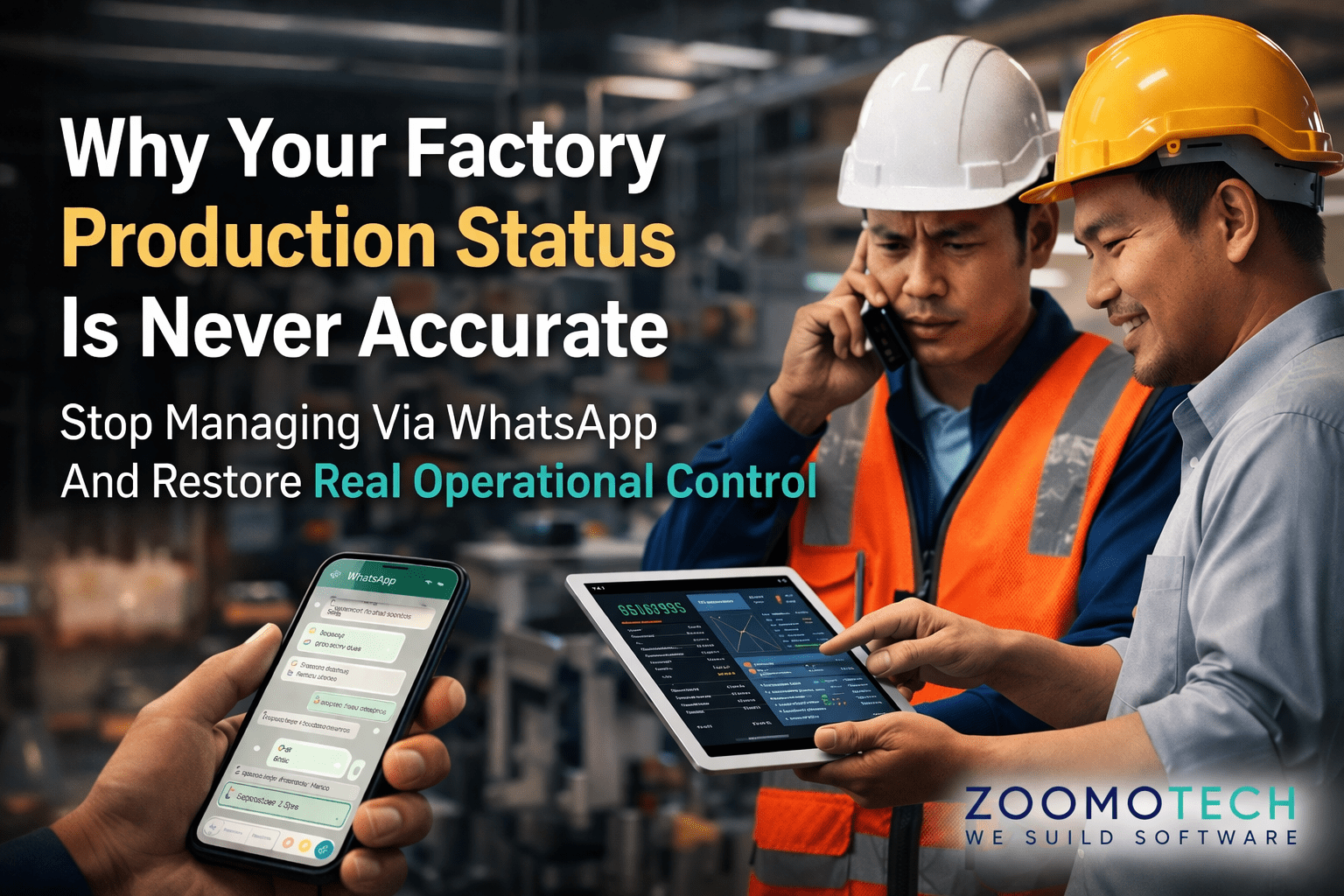
You receive yesterday’s numbers again. The Factory Production Status only reaches you after shifts end, passing through layers of supervisors and WhatsApp updates. By the time you read the report, the actual situation on the floor has already changed. Most business owners make critical decisions based on delayed information while machines have already moved on to the next task.
What Prevents Real Time Factory Production Status Updates?
Real-time Factory Production Status often lags behind because information depends on manual handling instead of direct system capture. When data moves through paper or verbal updates, it creates a gap between the machine and the management office.
Informal Communication Grows Naturally as Factories Scale Up
What worked when the team was small often continues as the business grows. Early-stage factories rely on direct shouting across the floor. As headcount increases, this naturally shifts into WhatsApp groups filled with photos, voice notes, and short updates that are difficult to organise.
Management does not create this intentionally. It evolves because it is fast and familiar. Over time, supervisors spend more time reporting than observing, while management assumes everything is running fine until a delay becomes obvious.
Paper Records Create a Permanent Information Blind Spot
On most factory floors, production logs remain beside the machine until the shift ends. Operators record output on physical papers and office staff must re-type everything into digital records later. This double handling of data creates a permanent information blind spot.
This gap creates more than delay. Handwriting errors affect inventory counts and output figures, while missing or damaged records make it difficult to trace specific batches. Over time, what is actually happening on the floor and what management sees in reports are no longer the same.
Data Consolidation Delays Mask Daily Bottlenecks
Many issues do not appear when they happen. They surface only when another process stops. A delay at one machine may only become visible when the next station cannot continue.
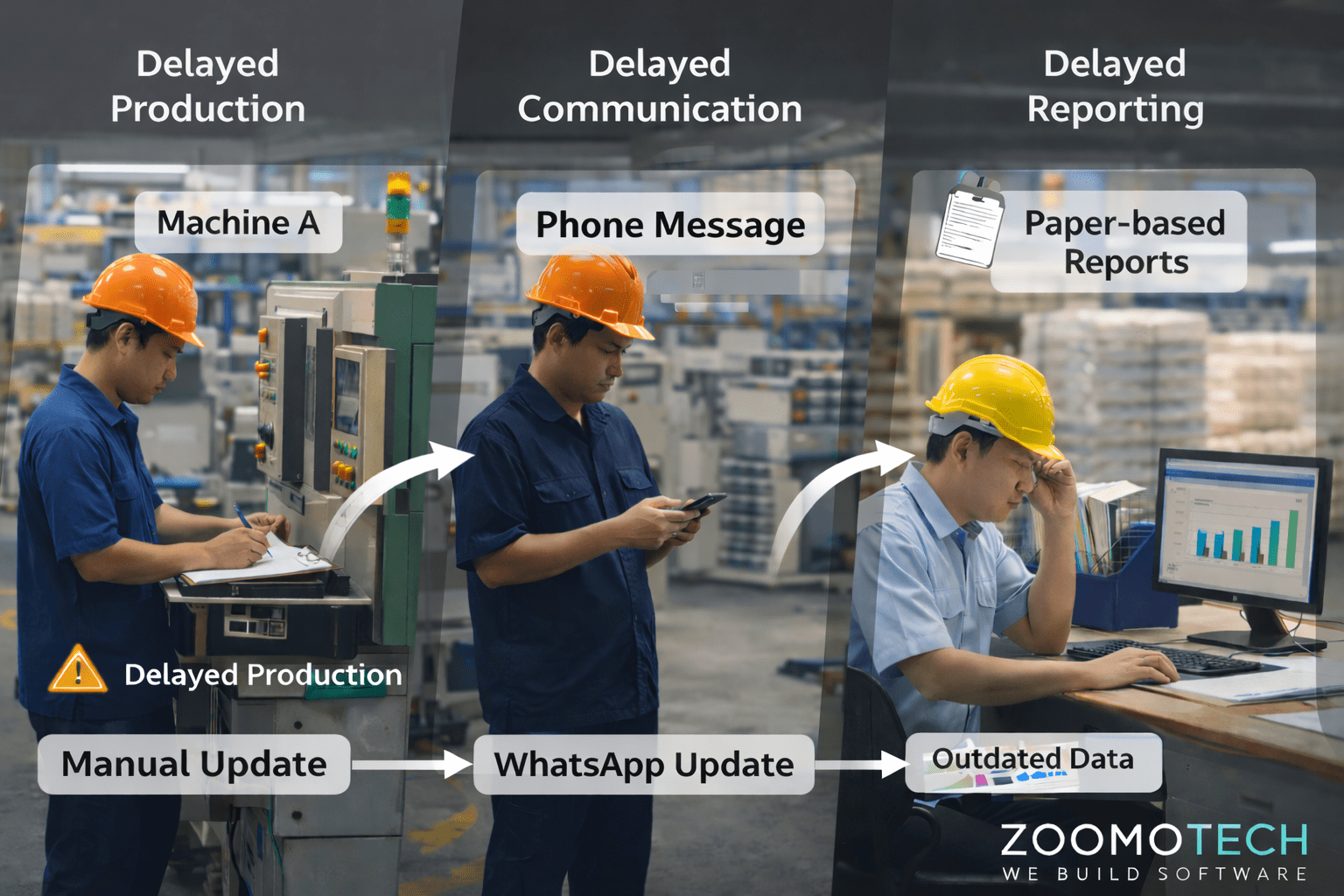
Supervisors spend hours checking, calling, and confirming before forming a full picture, a classic sign that manual reporting has hit its limit. By then, the problem has already passed. What looks like a small delay often spreads across departments over time, and identifying the root cause takes days instead of minutes.
Static Reporting Methods Cannot Keep Pace With Machine Speed
Traditional reports show a fixed point in time, but production keeps moving. By the time numbers reach the office, the situation on the floor has already changed.
Differences between floor counts and office records create tension between teams. Manual reporting cannot alert management to sudden drops in machine output. In some cases, staff adjust numbers at day-end to match expectations, which further reduces confidence in reported data.
Operational Complexity Outpaces Traditional Reporting Methods
Managing a small team works with informal tracking. As the factory grows to 50 or 100 staff, coordination becomes harder. More products, variations, and processes increase the chances of mistakes.
Standard software often requires changing existing workflows, which creates resistance. The real issue is not people or effort. The structure cannot support the current scale, especially when business growth starts breaking existing workflows. Information should be captured during production, not after everything has already moved forward.
Moving Toward a Best Fit Production Tracking System for Malaysian SME
Improvement does not start with replacing everything at once, especially when aligning with Malaysia’s Industry 4.0 direction for manufacturing digitalisation. It starts by identifying where information stops moving in your current process. Most Malaysian factories already know which specific department feels slow or unclear. Choosing a Best Fit Production Tracking System for Malaysian SME means finding a tool that matches your existing floor reality, rather than forcing a standard ERP that often clashes with unique workflows.
Instead of adding more reporting, focus on capturing simple signals at the source. A basic “start” and “stop” input from operators can already reduce delays. A well-designed Production Tracking System for Malaysian SME fits into existing workflows, without disrupting daily work on the floor.
How Delayed Status Reporting Increases Operational Financial Risk
What starts as a reporting delay gradually becomes a financial issue. When problems are discovered late, urgent delivery arrangements increase logistics costs. Teams begin over-ordering raw materials to avoid shortages caused by inaccurate stock data.
At management level, the impact becomes harder to control. Delivery commitments cannot be confirmed with confidence, which then affecting long-term customer trust. Internally, constant firefighting creates pressure on supervisors and operators, which leading to fatigue and staff turnover. Over time, the business pays for delays that were never clearly seen.
Fix the Information Flow Before Building Full Automation
Improvement does not begin with a full system rollout. It starts by stabilising how information moves on the floor. Focus on one bottleneck first, then build from there. When teams move from guessing to knowing, decisions become clearer, risks reduce, and progress happens step by step without disrupting daily operations.
Get Accurate Floor Status Without Increasing Supervisory Workload
The shift is not about adding more reports, but reducing delays between work and information. When manual firefighting is replaced with structured tracking, decisions become calmer and more predictable. Factory Production Status improves when data is captured at the source instead of after the fact. A simple internal review of where reporting slows down today often reveals where improvement should begin, without changing everything at once.
If you are noticing delays but unsure where the gap really is, a short discussion can help clarify. You may reach me out via WhatsApp or Email to walk through your current workflow and identify practical next steps. No commitment is needed, just a clearer understanding of your current situation.
—
Ning
Founder, Zoomo Tech