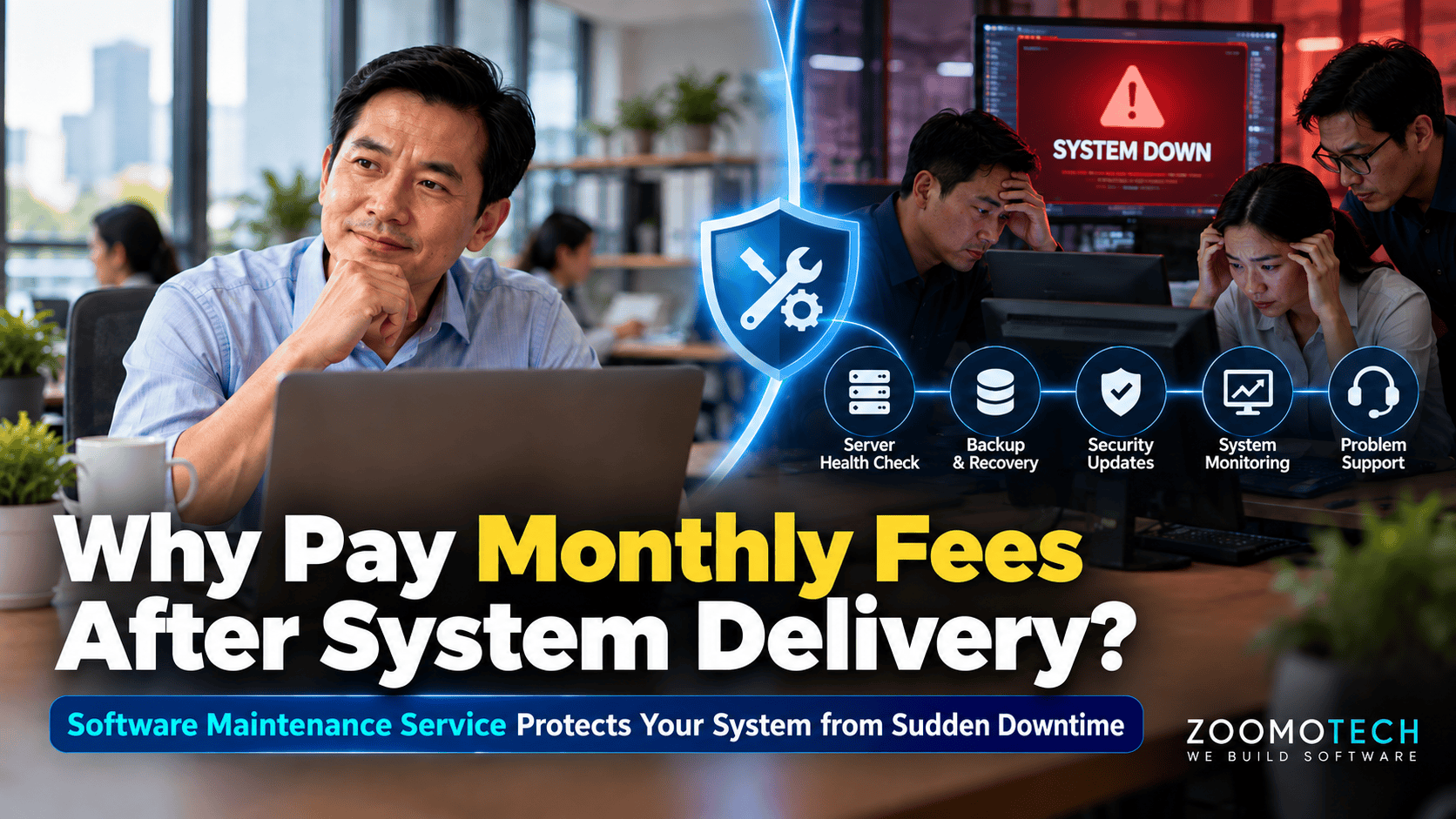
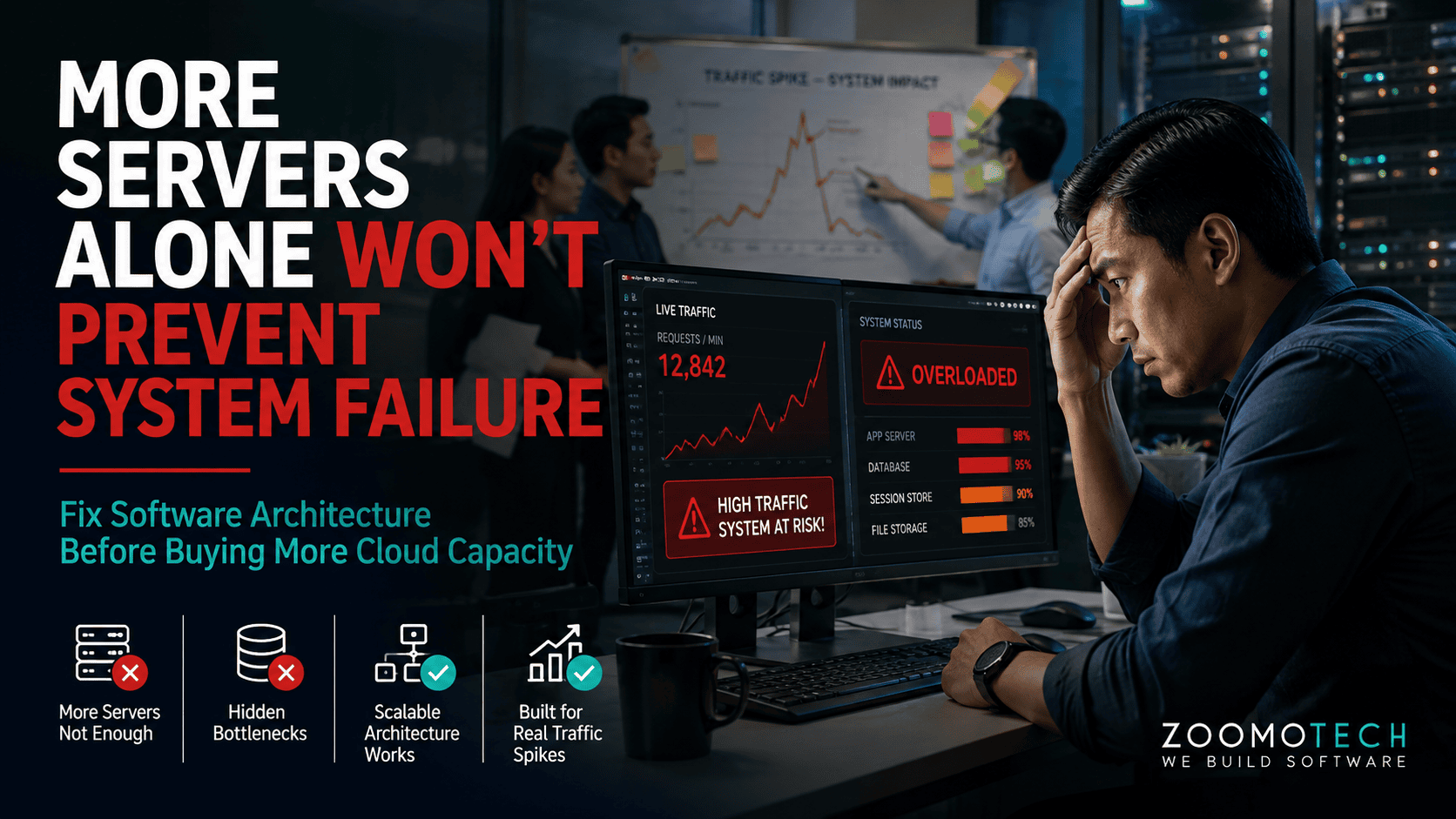
The warning signs usually start quietly. WhatsApp replies become slower. The promised “final testing” keeps extending every week. A module that looked almost completed stays unfinished for months. Then one day, your internal staff realise the programmer no longer answers calls consistently, and nobody internally can confirm where the latest source code actually exists anymore.
Many Malaysian SME owners experience this after trusting personal referrals instead of structured vendor evaluation. The problem becomes more serious when the Software Vendor Disappear halfway through operations that already depend on the system. At that stage, the issue is no longer simply about finding another programmer. It becomes a management recovery exercise focused on regaining control over workflows, data, and business continuity.
Common Reasons Why a Software Vendor Disappear
Software Vendor Disappear when projects become financially unstable, technically difficult to maintain, or operationally unsupported after delivery begins.
- Under-quoted projects become unprofitable
- Senior developers resign without replacement
- Legacy systems create difficult migration problems
- Weak project management gradually disrupts delivery control
- Vendor cashflow pressure shifts business priorities
The Rise of Freelance Culture in Malaysian IT
Many Malaysian SMEs started their digital journey through freelancers, personal referrals, or small development teams because the entry cost felt manageable. For smaller mobile apps or simple internal tools, this approach can still work reasonably well during the early stage. Problems usually begin when the same system gradually becomes deeply involved in daily operations involving sales, production, finance, and reporting.
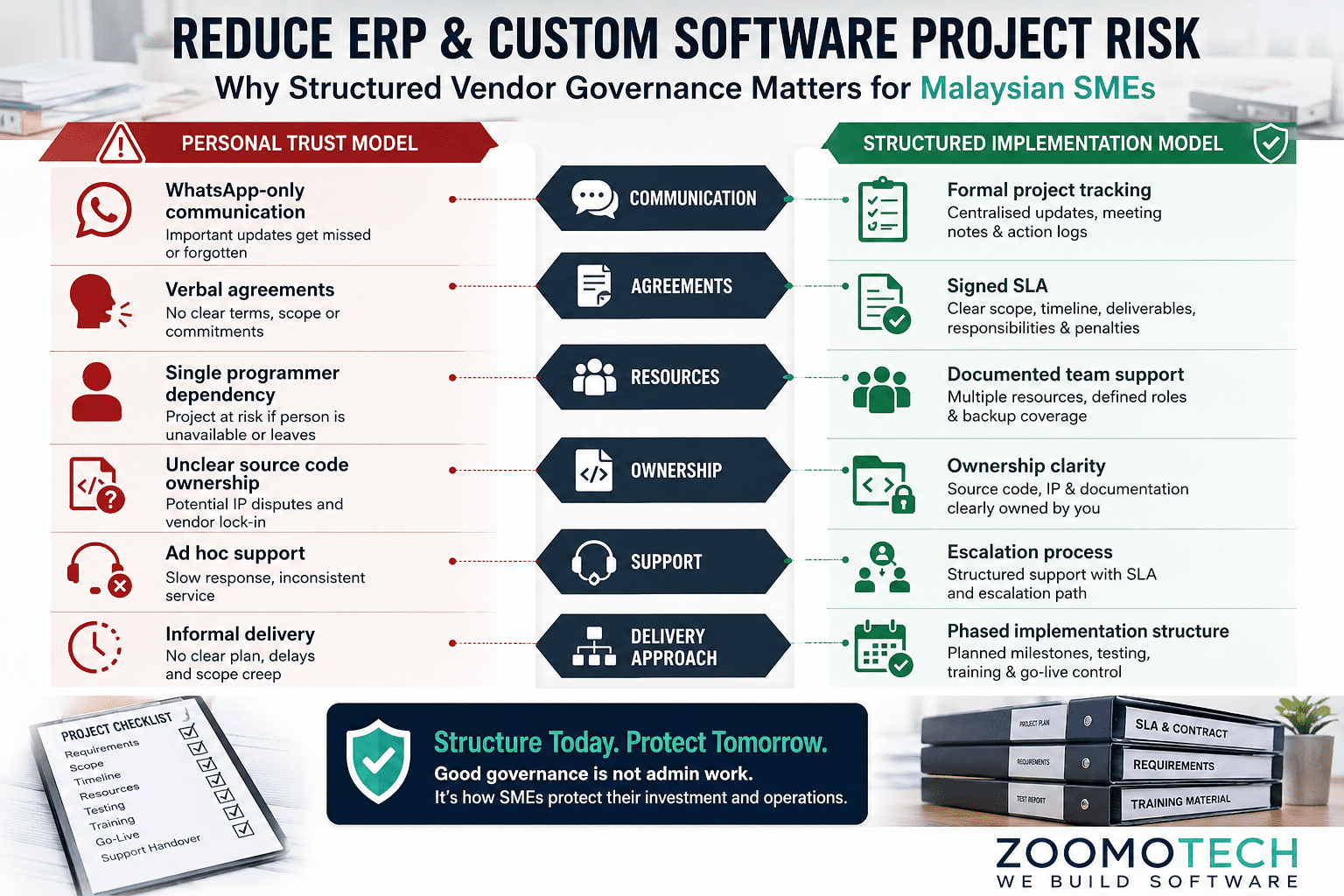
The operational risk changes once the software becomes business-critical. Informal WhatsApp discussions, unclear ownership of source code, and verbal promises become difficult to manage when projects expand across multiple departments. The issue is not always directly caused by dishonesty. In many cases, the vendor structure itself was never designed to support long-term operational dependency, maintenance responsibility, or structured project governance.
Support Promises Gradually Reduce After Initial System Delivery
The relationship often changes after deployment goes live. During the sales and development stage, replies are usually fast because the vendor is actively securing project completion and final payment. Once the system stabilises, many SMEs begin depending heavily on informal WhatsApp support without clear maintenance structure, escalation process or response expectations.
Small operational issues then start accumulating quietly. A report exports incorrectly. A user permission setting breaks after updates. Staff begin creating temporary workarounds while waiting for responses. Management may delay escalation because daily operations still appear manageable from the surface. Over time, unresolved support gaps slowly reduce confidence in the system and increase dependency on manual coordination again.
Internal Teams Struggle When Vendor Knowledge Disappears Suddenly
Many SME internal teams understand how to use the system, but not how the system actually works behind the workflow. This becomes a serious problem when the original developer suddenly stops responding or leaves the project halfway. Staff may know which buttons to click, yet nobody internally understands the reporting logic, approval conditions, or integration structure behind the process.
Operational dependency increases quietly over time. Minor technical issues that once seemed manageable begin affecting purchasing, sales coordination, production scheduling, or customer updates. Different departments then begin creating their own manual backup methods to continue daily operations. As uncertainty grows, staff confidence weakens and management gradually loses clarity on which process is still reliable.
Missing Source Code Delays IT Project Rescue Efforts
Many SMEs assume system ownership automatically includes full technical access, even though copyright ownership and software work ownership in Malaysia may depend on how the project engagement was originally structured. In reality, some businesses receive only login credentials while the deployment server, database structure, and source code remain fully controlled by the original vendor. The problem usually surfaces only after support communication starts slowing down or when another developer attempts to continue the unfinished project.
IT Project Rescue cases often become slower and more expensive because the incoming vendor must first understand how the unfinished system was originally built. Reverse engineering consumes significant time, especially when documentation remains incomplete, outdated, or inconsistent. During this transition period, operational continuity becomes harder to maintain because nobody can confidently troubleshoot or extend the system safely, especially when businesses already face high dependency on key individuals.
Transitioning From Personal Trust to Professional Service Contracts
Many Malaysian SMEs begin projects through personal recommendations, former colleagues, or long-term business contacts. This approach feels comfortable during the early stage because discussions remain flexible and informal. Problems usually appear later when project scope expands, timelines shift, or disagreements begin surfacing around unfinished deliverables, ownership expectations, and support responsibilities.
Structured agreements usually reduce long-term misunderstanding and operational ambiguity. Professional firms often charge more for rescue or takeover projects because they must first stabilise undocumented systems before continuing development. Service Level Agreements, phased delivery structures, and source code ownership clauses help protect both parties during complex implementations. As systems become business-critical, operational structure gradually matters more than personal familiarity alone.
Rebuilding Staff Confidence After a Failed System Launch
A failed software rollout affects more than operational efficiency. Ground-level staff often become frustrated after spending months adapting to workflows that later stop functioning properly. Some departments may quietly return to manual coordination because they no longer trust the system to support operations consistently.
Recovery also involves rebuilding internal confidence across departments. Department heads need clear communication about what will be fixed, what remains usable, and what timeline is realistic. Small operational improvements usually matter more than ambitious recovery promises during this stage. When staff begin seeing stable reporting, faster issue resolution, and clearer ownership from the new vendor, resistance toward future digital projects gradually becomes easier to manage.
Financial Loss From Delayed Recovery Exceeds Project Costs
Many SME owners initially view a failed software project as a technical inconvenience. The larger financial impact usually appears later through slower operations, duplicated manual coordination, delayed reporting cycles, and declining staff confidence. While the system remains unstable, companies continue paying salaries for temporary coordination processes that were supposed to be automated months earlier.
The longer recovery is delayed, the higher the operational exposure becomes. Customer response time may weaken, data consistency becomes harder to protect, and management decisions begin relying increasingly on incomplete information. Some businesses also postpone expansion plans because the operational foundation no longer feels reliable enough to support growth. By the time emergency intervention becomes necessary, recovery costs are often significantly higher than earlier structured corrective action.
Choosing Stability Over the Lowest Possible Price
Software should be evaluated as a long-term operational asset rather than only as a project quotation. Established implementation structures, phased delivery, and clarity before commitment usually create stronger risk control for SMEs managing business-critical operations, especially after experiencing ERP implementation failures. Over time, stable collaboration with partners who understand Malaysian SME operational realities often reduces project friction more effectively than pursuing the lowest possible upfront pricing.
Get Your Custom Software Project Back on Track
A failed implementation or missing vendor does not automatically mean the system must be abandoned completely. In many cases, recovery becomes possible once operational logic, ownership structure, and technical access are clarified properly. Software Vendor Disappear situations usually become harder to recover when businesses delay structured action for too long while hoping communication will eventually return. Stable recovery usually begins with realistic expectations, phased planning, and a clear focus on business continuity before future operational expansion decisions are made.
If your team is currently stuck between unfinished systems, manual workarounds, or unclear vendor ownership, a private WhatsApp or Email discussion may help clarify the next practical step. Sometimes a short operational review is already enough to determine whether recovery, stabilisation, or phased rebuilding represents the safer direction for the business.
—
Ning
Founder, Zoomo Tech