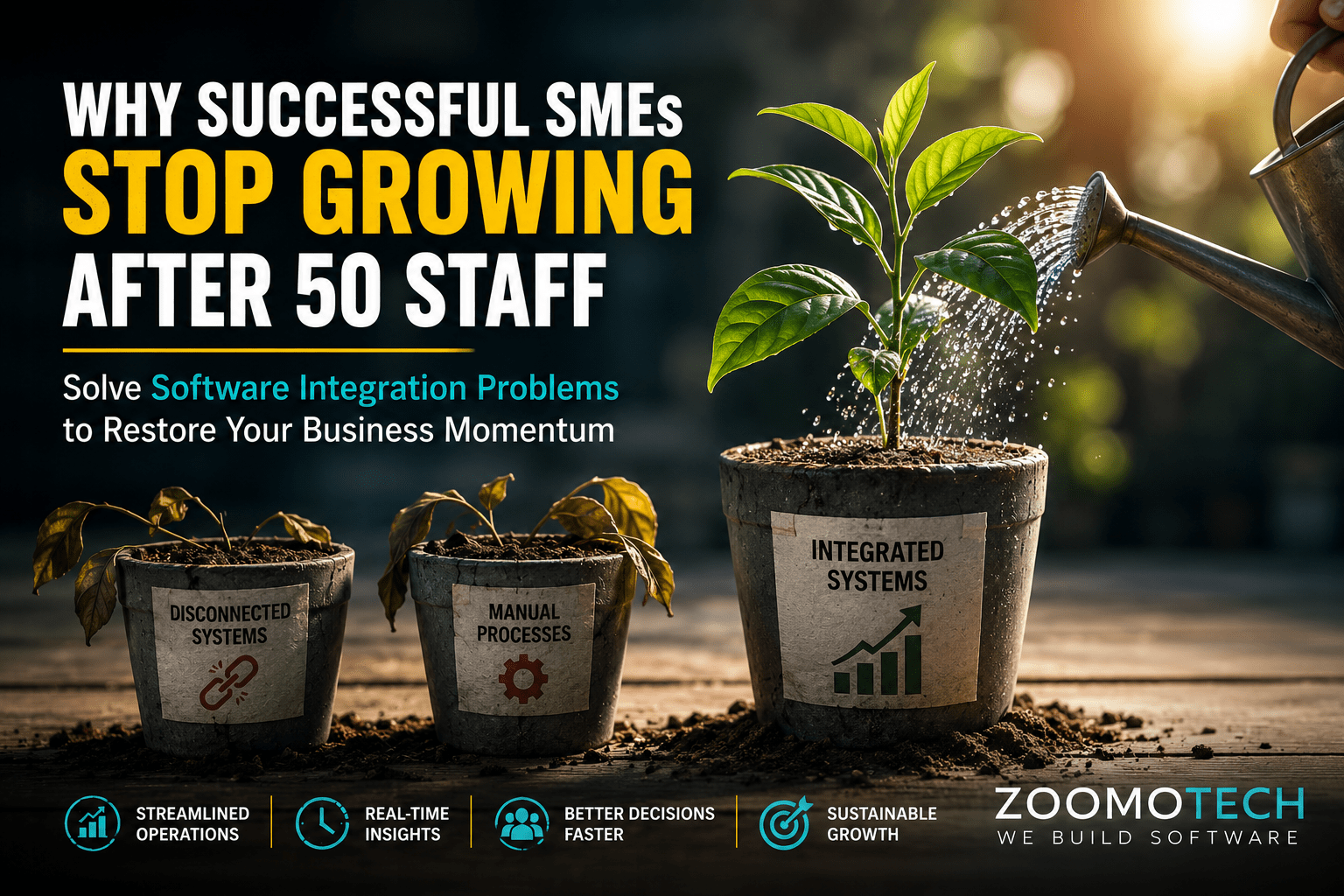
Sales keep increasing, but daily operations feel heavier every month. One department uses accounting software, another manages stock separately, while production updates arrive through WhatsApp or phone calls. Staff spend more time checking numbers between systems than completing actual work. After reaching 50 or 80 staff, many Malaysian SMEs begin noticing the same pattern repeating every week. Software Integration Problems start appearing quietly inside normal daily operations.
When Software Integration Problems begin affecting daily coordination, increasing sales often starts increasing operational mistakes instead. This usually is not a staff performance issue. Different departments simply reached a stage where disconnected systems can no longer support smooth coordination.
How Software Integration Problems Limit Business Expansion
Software Integration Problems happen when departments operate using disconnected systems, causing management teams to rely on delayed information during customer, production, and supplier coordination.
- Different departments store different versions of operational data
- Management decisions depend on reports delayed by 24 to 48 hours
- Slow coordination causes missed customer and sales opportunities
- Integrated data flow improves coordination speed and reporting consistency
Why Departments Naturally Buy Different Software Tools
Most Malaysian SMEs did not intentionally create disconnected systems. Sales teams needed a CRM to track customers, finance implemented accounting software earlier for audit and tax purposes, while production later introduced MES or planning tools to solve factory coordination issues. Each department purchased software based on immediate operational pressure at that particular stage of growth.
The situation usually develops gradually. Management prioritises solving urgent daily bottlenecks first, while long-term system structure receives less attention. Over time, more software tools are added whenever new operational issues appear. This patchwork approach often works during early growth because experienced staff manually bridge the gaps between departments. However, once operations become larger and more complex, those disconnected gaps slowly become areas where reporting delays, duplicated work, and profit leakages begin accumulating.
Six Signs Your Software Integration Problems are Severe
The warning signs usually appear gradually. Staff begin entering the same customer orders into multiple systems because sales, warehouse, and finance records no longer synchronise properly. Inventory quantities begin differing between departments, while monthly reporting starts consuming hours of manual checking before management meetings. Many SMEs eventually notice staff spending more time verifying information than completing actual operational work.
Customer complaints also become harder to trace because information gets lost during handovers between departments. Approval processes slow down as businesses grow larger, even after hiring additional staff. At this stage, operational pressure no longer comes from workload alone. Coordination quality gradually weakens because disconnected systems push teams into creating manual workarounds every day.
Fragmented Data Leads to Expensive Operational Errors
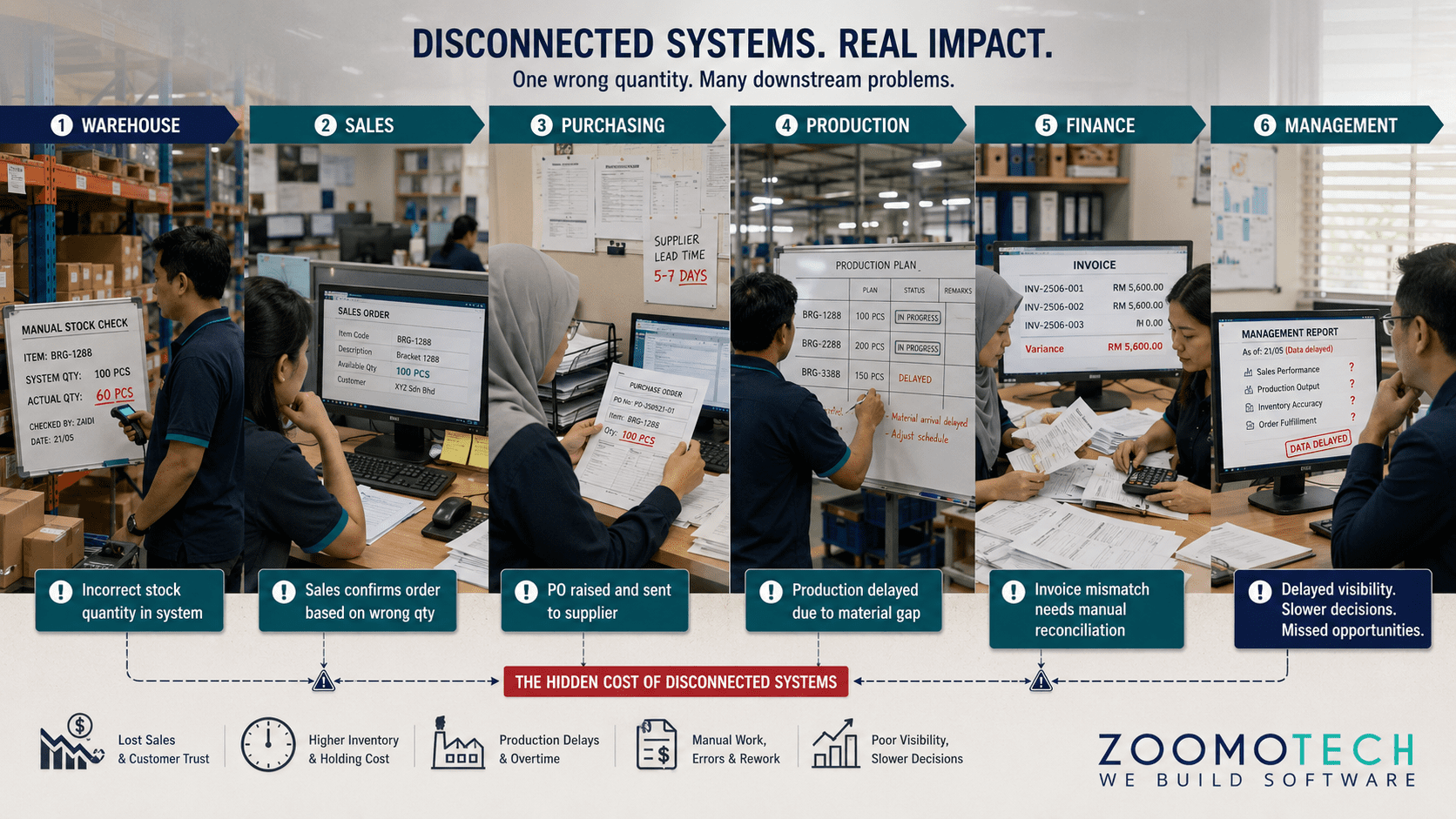
Small operational mismatches often create larger financial consequences over time. Warehouse stock levels may appear sufficient inside one system, while sales teams already promised delivery to customers based on different information. Purchasing teams may over-order materials to compensate for uncertainty, while production schedules keep shifting because actual stock availability differs from reported figures.
These coordination gaps quietly increase operating costs over time. Missing approval records delay vendor payments, creating unnecessary friction with suppliers. Some staff eventually spend almost 30% of their daily time checking information between systems before making decisions. A single inventory mistake inside disconnected workflows may continue affecting purchasing, production, invoicing, and customer delivery long before anyone identifies the original source of the problem, especially when manual business reporting delays operational clarification.
Delayed Information Reduces Management Response During Problems
Operational issues become harder to control when management receives information too late. Production delays sometimes appear only after customer complaints arrive, while recurring machine downtime stays buried inside departmental reporting. By the time reports reach directors or managers, the actual operational condition may already have changed several times throughout the day.
Delayed response creates compounding pressure. Financial exposure increases quietly when shipment delays, rejected products, or urgent purchases are discovered after the impact has already spread across departments. Management teams then start relying on outdated reports during fast-moving operational situations. Over time, these small coordination gaps stop behaving like isolated mistakes and start becoming structural operational risks affecting the entire company.
Different Software Vendors Create Long-Term Operational Dependency
Most software vendors focus only on the scope of their own system. Accounting vendors concentrate on finance workflows, while production vendors optimise factory operations separately. CRM providers prioritise sales activities without fully understanding warehouse coordination or purchasing flow. As more systems are introduced over time, SMEs gradually become dependent on multiple vendors managing separate parts of the same operations.
The coordination burden eventually falls back onto internal staff. Employees become the middle layer translating information between software providers whenever issues happen. Small system modifications inside one department may unexpectedly affect reporting or workflows elsewhere. After every expansion, integration complexity increases further because no single party fully understands the operational relationship between all departments. This challenge is also reflected in Malaysia’s broader push the business digitalisation initiatives led by the MDEC (Malaysia Digital Economy Corporation) emphasize a more unified approach to tech adoption.
Integration Without Workflow Alignment Creates New Operational Friction
Connecting software systems alone does not automatically improve operations. Many SMEs focus heavily on technical integration while overlooking how departments actually communicate and make decisions daily. Existing approval flow, exception handling, and staff coordination habits still determine how work moves across the company, regardless of how advanced the software appears.
Operational structure matters before automation. When workflows are poorly aligned, staff often create bypass methods outside the system to maintain daily operations. Some teams return to WhatsApp messages, spreadsheets, or verbal coordination because the software no longer reflects real working conditions. Over time, forced implementation quietly increases staff resistance, while operational friction continues growing despite additional technology investment.
The Hidden Cost of Postponing System Integration
Many SMEs assume disconnected systems only create operational inconvenience. In reality, the business impact often becomes much larger over time. Some companies eventually reject larger customers or expansion opportunities because internal coordination already feels too difficult to manage safely. Good managers and department heads also become frustrated when daily operations depend heavily on repeated checking, manual follow-ups, and inconsistent information between departments.
The financial exposure usually stays hidden at first. Procurement mismatches, duplicated purchases, delayed approvals, and incomplete records quietly create leakages across the procurement-to-pay cycle. At the same time, integration complexity increases every year as more software tools, workflows, and historical data accumulate. What could have been solved earlier through structured planning gradually becomes more expensive, more disruptive, and harder to recover later, especially after ERP project scope changes begin expanding across departments.
Stable Systems Support Growth Without Disrupting Daily Operations
Sustainable improvement usually happens step by step. Stable operational systems are usually built through gradual alignment between workflows, reporting structure, approval processes, and daily working habits. Clarity should come before commitment. Businesses that prioritise risk control, operational continuity, and long-term structure usually experience smoother transitions compared to companies pushing aggressive automation too early.
Steps to Restore Growth via Structured Integration
Operational pressure usually compounds slowly until management teams begin spending more time coordinating than growing the business. Software Integration Problems often become easier to solve when companies first identify where information stops flowing between departments. A structured review of the current software environment often helps uncover reporting gaps, duplicated workflows, and coordination delays before they become larger operational problems. Many SMEs achieve better long-term stability by prioritising one high-impact integration bridge first before expanding further across the organisation.
If some of these situations feel familiar, a private discussion through WhatsApp or Email may help you assess where operational coordination is slowing down internally. Sometimes a simple workflow discussion already reveals where reporting gaps, duplicated work, or approval delays are quietly affecting business growth.
—
Ning
Founder, Zoomo Tech