“Let customers pay online” sounds simple until the first few payments arrive. A property agency collects a booking deposit, a training centre receives course fees, or an insurance agency takes a premium through online transfer. Then someone checks WhatsApp, email, bank notifications, or screenshots to confirm who paid, what it is for, and whether the amount is correct.
As transactions increase, the payment verification process becomes more time-consuming. When this starts causing delays, repeated checking, or mistakes, management naturally looks for a better way to collect payments online. Payment Gateway Malaysia then becomes an option to consider, followed by the question of which provider and package actually fit the business.
The decision is not simply about accepting online payments. It is about whether the payment flow fits how the company operates, how customers prefer to pay, and how much manual work the staff still need to handle. As the business grows, the right payment setup can affect not only payment collection, but also reconciliation, customer service, finance, and the next step in the workflow.
Payment Gateway Malaysia: What Should SMEs Check First
Before choosing a payment gateway provider, an SME should first confirm whether a gateway fits its customer payment behaviour, transaction profile, settlement needs, and existing workflow.
- Business Need: Determine whether online payment automation is actually required.
- Customer Behaviour: Check how customers prefer to pay, whether online or physical.
- Transaction Profile: Review typical payment amount and expected transaction volume.
- Settlement Needs: Consider when funds must reach the business bank account and whether delays affect operations.
- Payment Methods: Identify required payment options and confirm provider eligibility.
- Integration Readiness: Check whether payment status can connect with customer, order, accounting, or operational records before making the final choice.
Paying Online Is Not the Same as Using a Gateway
Customers can pay online without using a payment gateway. A bank transfer may work well for a business with a small number of transactions, but someone still needs to confirm the payment, match it to the right customer, and update the relevant record. The customer also sees a different payment journey depending on the method used.
A gateway can make the payment status easier to track and give the business a clearer transaction record. But that does not mean it is the right choice for every SME in Malaysia. The real question is how much payment volume you handle, how your customers prefer to pay, and how much manual work your staff still have to do for each transaction. Once these factors are clear, you can compare the actual cost of each option more meaningfully.
Payment Gateway Fees in Malaysia Change the Real Cost
The transaction fee is often the first figure an SME sees, but it is not the full cost of using payment gateway. A provider may also charge setup fees, annual fees, payout or settlement charges, and different rates for cards, bank payments or e-wallets. A lower transaction rate may still produce a higher total cost at larger monthly volume. The Payment Gateway Fees in Malaysia should therefore be viewed as a total operating cost, and not just a percentage shown on the provider pricing page.
For example, 20 transactions and 2,000 transactions create very different cost profiles. Compare the estimated annual cost using your average transaction value, monthly volume, payment method, and expected growth. When comparing the Payment Gateway Malaysia packages, use this actual cost picture rather than the transaction rate alone.
Large Customer Payments Can Expose Settlement Constraints
Settlement matters more when each customer payment is large. A property agency receiving a substantial deposit, an insurance business collecting a premium, or a training company collecting several thousand ringgit may need access to that cash for upcoming business operating commitments. The payment can succeed while the money remains unavailable.
Therefore, the Payment Gateway Fees are only one part of the assessment, settlement timing can matter just as much. A T+1 cycle may suit one SME, while a longer window, such as T+4, may create cash flow pressure when suppliers, instructors, refunds, or other commitments depend on that cash.
Customer Payment Methods Affect More Than Convenience
Customers do not all pay in the same way. A Malaysian business may receive payments through FPX or DuitNow online banking, while some customers prefer cards or eWallets. The right method depends on who is paying, the transaction size, and whether the business mainly serves consumers or other businesses.
However, more payment options are not automatically better. Each additional method can affect fees, settlement timing, reconciliation, refunds, and technical support to the customer. In Malaysia, common online payment options include FPX and DuitNow. FPX lets customers pay through participating banks, while DuitNow allows customers to pay through participating banks or e-wallets. For SMEs, the better approach is to offer the payment methods that match how your customers prefer to pay, rather than simply adding more options.
Provider Checks Start Before the Signup Form
A suitable gateway can still become a poor fit if the business does not meet the provider’s merchant onboarding requirements. Before comparing packages, first check whether your business meets the provider’s requirements, including SSM registration, required documents, business category, transaction limits, and any restricted activities. Verify the provider’s regulatory position through Bank Negara Malaysia’s Financial Sector Participants Directory rather than the provider marketing brochure.
For Malaysian SMEs, familiar names in the payment gateway market include Billplz, senangPay, Fiuu, iPay88, eGHL, Revenue Monster, Curlec, Xendit, and KiplePay. The list is not a recommendation, because each provider has different payment methods, pricing, settlement terms, eligibility requirements, and integration options. Therefore, the shortlist should be based on the business’s actual requirements rather than brand familiarity alone.
Payment Gateway Malaysia Must Connect Beyond Checkout
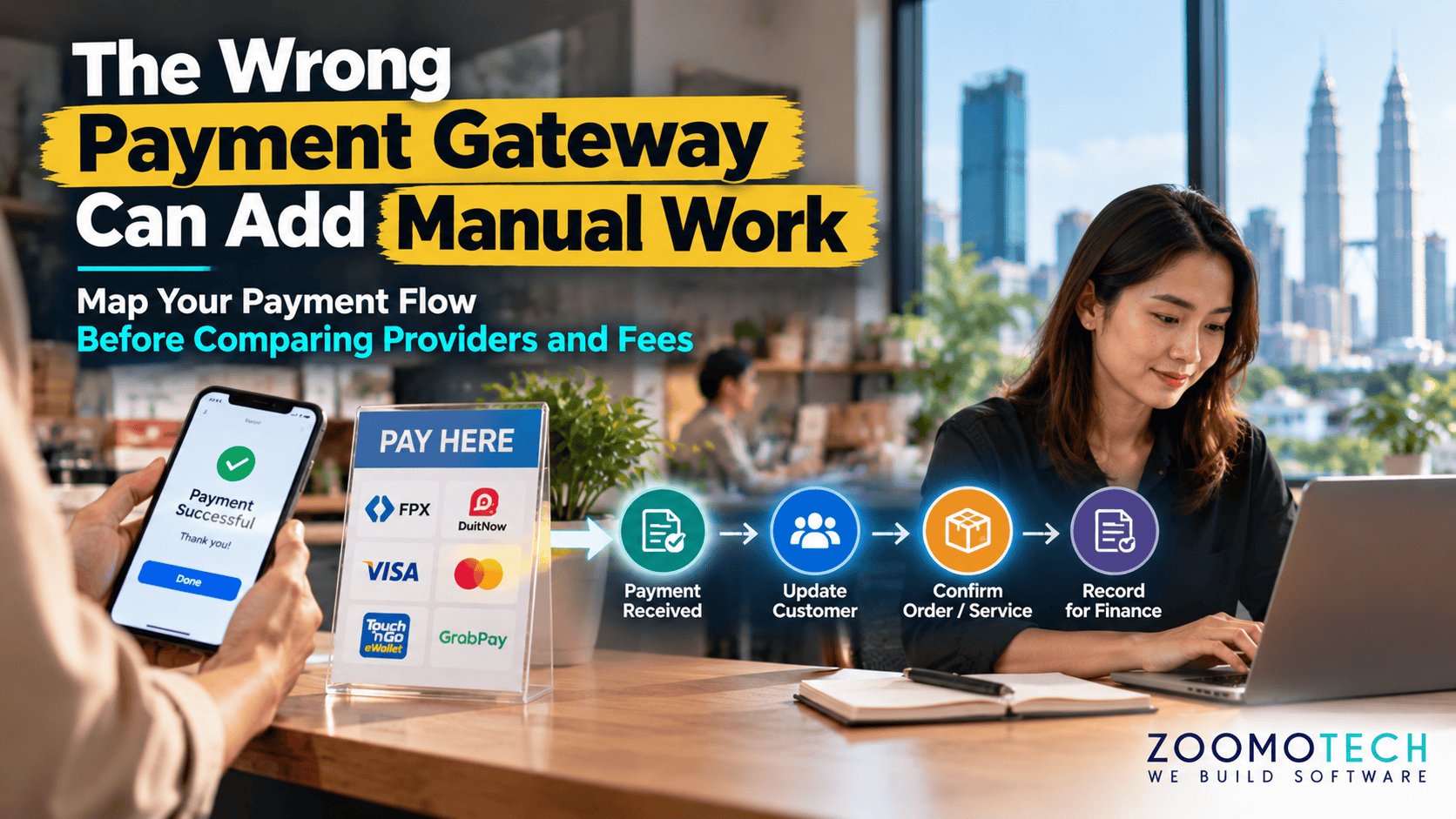
A payment page only handles the customer’s payment step. After receive payment from the customer, the company may still need to update the customer record, release an order, record the transaction for finance, or trigger the next step. Without proper software integration between the gateway and your business systems, your staff may still need to check payment reports from the gateway and update your system manually.
This is where integration becomes important. Payment status should send back into your business system automatically, so the next step after received payment can trigger immediately without manual checking. API and webhook support can make this connection possible. When choosing a gateway, SMEs should consider not only today’s payment process, but also how payment information may need to connect with the business system as operations grow.
Payment Exceptions Can Become an Operations Problem
A successful payment is only part of the process. Payments can also be pending, declined, refunded, or interrupted before the business system receives a final status. When this happens, staff still need to know what happened, what action is required, and whether the customer needs to be contacted.
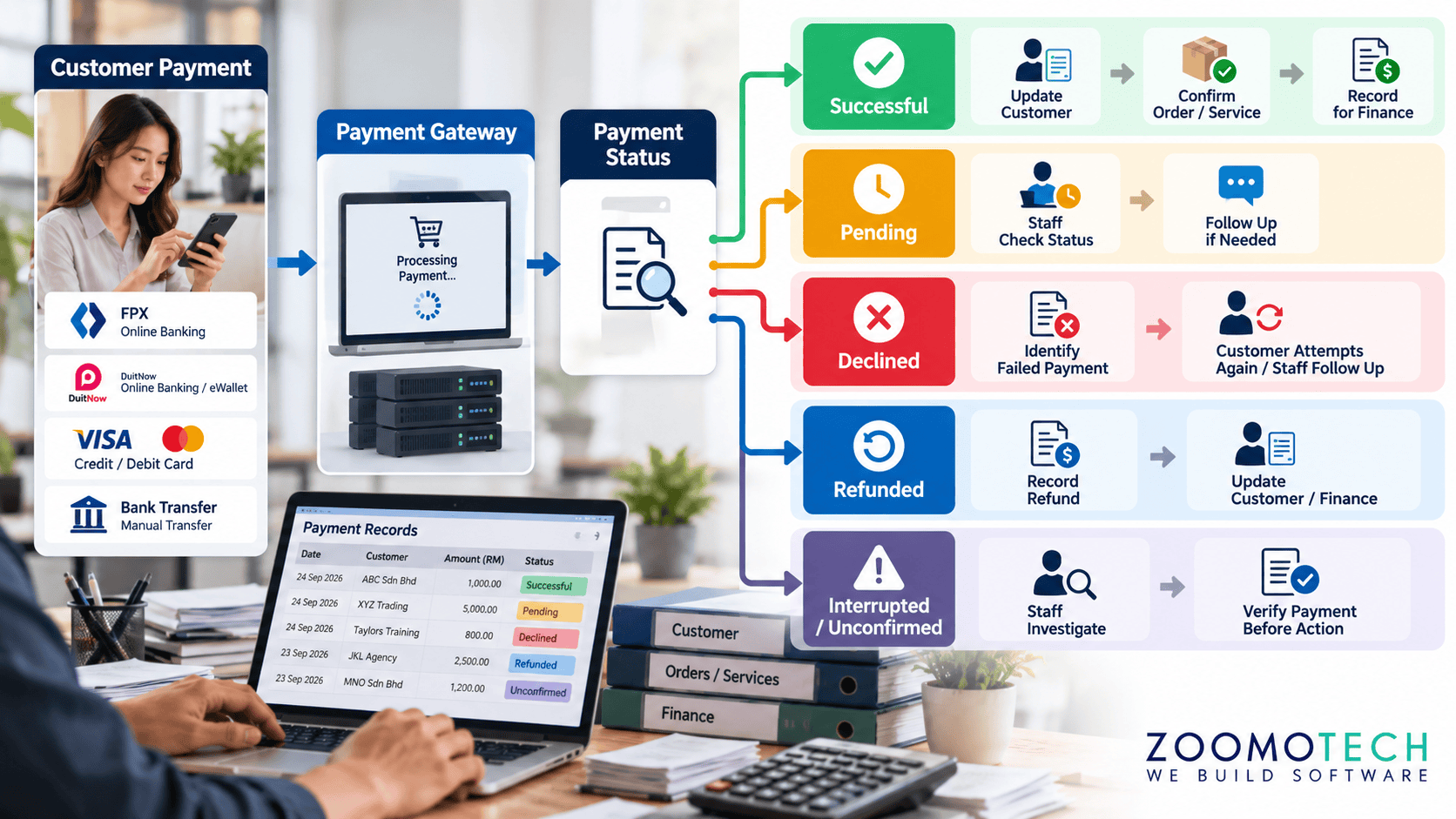
This becomes more important when payment handling involves several people or systems. Without a clear process, staff may check different records, follow up with customers unnecessarily, or update the same information more than once. A well-designed payment flow should therefore cover both normal transactions and exceptions, so manual business operations are only needed when human action is actually required.
Choose the Gateway After Mapping the Payment Flow
Therefore, a safer approach is to clarify the payment flow before choosing a provider: who pays whom, for what, and what happens after success or failure. Decide where payment information should be recorded and which steps need human review. This simple mapping creates clarity before commitment and helps SMEs control implementation risk before selecting the gateway.
Good Payment Infrastructure Should Fit the Business
There is no single payment gateway that suits every SME. The decision should consider more than transaction fees alone. Settlement timing, payment methods, transaction limits, eligibility, and regulatory requirements should also be part of the assessment. Integration also matters because payment records may need to connect with customer, order, registration, or finance workflows. When comparing Payment Gateway Malaysia options, consider whether the setup fits the way your business operates today and can support the process as transaction volume grows.
If you are currently looking for a payment gateway, take a moment to review the full payment flow before choosing a provider. You can reach me through WhatsApp or Email to share how your current process works, what is causing extra work, or where payments are getting stuck. There is no need to prepare a formal brief. A private conversation is enough to understand the situation and decide whether any change is needed.
—
Ning
Founder, Zoomo Tech