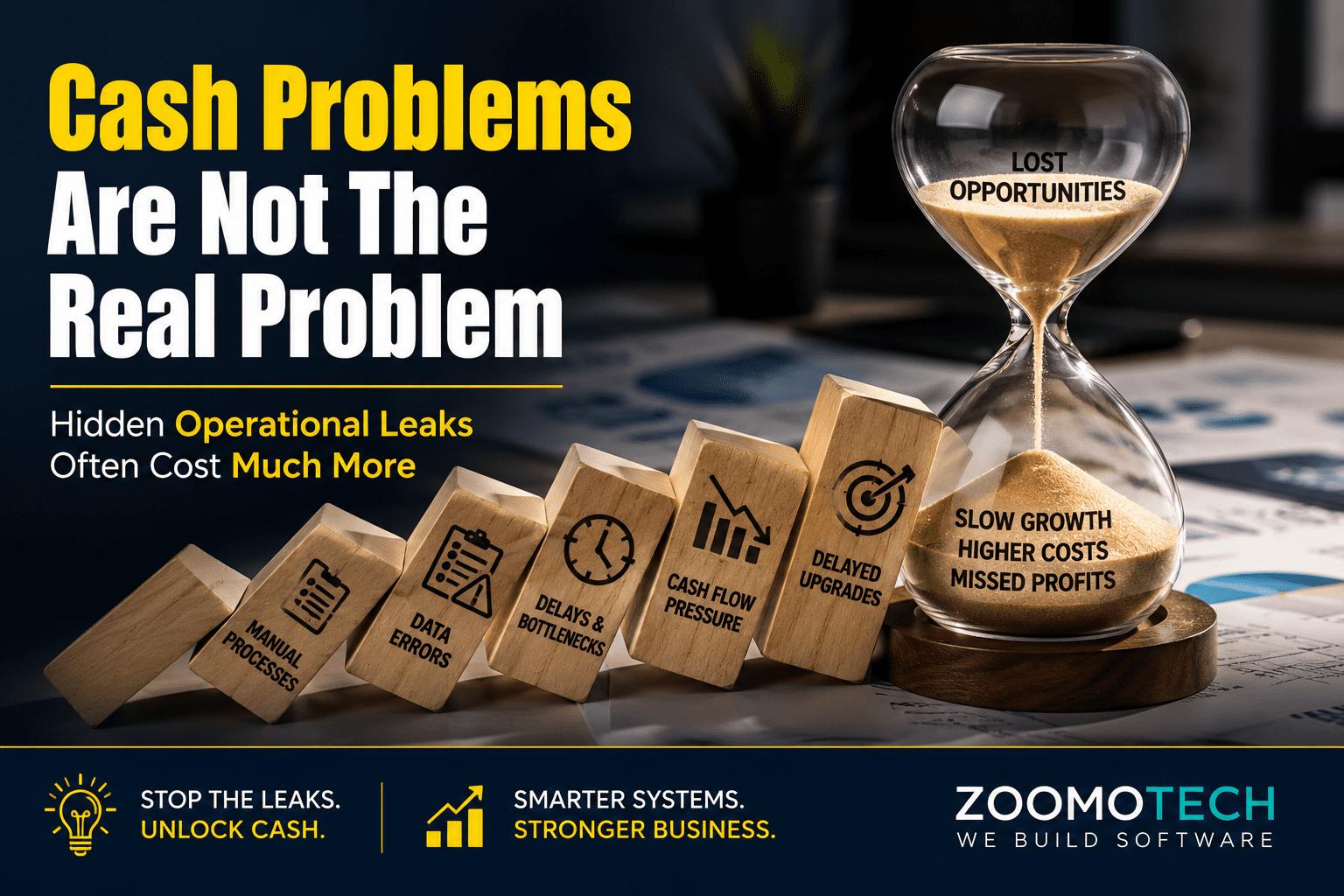
Every month feels like a balancing act. Salaries need to be paid, suppliers need to be managed, customers take longer to pay, and unexpected expenses keep appearing. For many Malaysian SME owners, Cash Flow Issues are not just a financial concern. They influence almost every business decision. When a software upgrade is discussed, it often gets pushed aside with a familiar thought: “Let’s wait until the company is in a better financial position.”
The challenge is that waiting often becomes a long-term habit. Manual reports, duplicated data entry, paper records, and disconnected processes continue because they appear cheaper than investing in a system. Months turn into years, and the business adapts around these limitations. What many owners eventually discover is that the right system is not only a tool for expansion. In some situations, it becomes an important tool for protecting margins, controlling costs, and sustaining the business.
Real Reasons Owners Delay Essential System Improvements
Owners often delay system upgrades because Cash Flow Issues make software appear optional, even when manual processes are already increasing operational costs and reducing business efficiency.
- Waiting for the perfect cash position often delays necessary action
- Manual bottlenecks quietly increase daily operating costs
- Operational leaks are harder to detect than direct expenses
- A system becomes necessary when inefficiency affects profit
- Phased upgrades reduce financial risk and improve control
Manual Workflow Costs Often Go Unmeasured
The challenge is not poor management. Most Malaysian SMEs built their business using practical tools such as Excel, paper forms, WhatsApp messages, and basic accounting software. These tools work well during the early years because they are familiar, affordable, and easy to implement. As the company grows, however, more staff become involved, more transactions need to be tracked, and information starts moving across multiple departments.
What often goes unnoticed is the amount of time spent on rechecking data, updating reports, consolidating information, and correcting mistakes. Standard accounting software records direct expenses such as salaries and utilities, but it does not measure the operational waste created by manual processes. Over time, this hidden cost quietly reduces margins and consumes management attention, making it harder for management to decide which operational improvement should receive investment first.
Managing Your ERP Investment Planning Strategically
Many owners assume software projects must start big. This assumption often creates hesitation because the budget appears too large from the beginning. In reality, many successful SME projects start by solving one operational problem rather than replacing everything at once. A factory may begin with production tracking, while a trading company may focus on inventory control.
A practical approach to ERP Investment Planning is to identify which workflow creates the highest operational leakage in terms of time, cost, or management attention today. Focus on one bottleneck first, measure the outcome, and use those results to build a roadmap for future improvements. By limiting the scope to essential workflows, management can maintain financial control while reducing the risk of investing in functions that are not yet needed, a challenge commonly seen when ERP project scope changes begin expanding beyond the original objectives.
Linking System Implementation to Immediate Cash Recovery
Not every software project produces value years later. Some improvements can affect cash movement much sooner than many business owners expect. For example, automated weighing systems can reduce material discrepancies, while integrated stock tracking can prevent unnecessary purchases caused by inaccurate inventory records, a common issue in manufacturing and trading companies.
The same principle applies to invoicing and collections. When information moves faster between departments, invoices can be issued earlier and payment follow-up becomes easier. Fewer manual mistakes also reduce rework and administrative effort. Although these improvements appear operational, they often contribute directly to faster cash collection, lower operating costs, and better working capital management.
Why Phased Rollouts Protect Long Term Working Capital
Large projects are not always the safest choice. A company may have sufficient budget today, but committing everything to a single implementation increases financial exposure if priorities change. Smaller phases are generally easier to manage, easier to fund, and easier for staff to adapt to.
A phased rollout allows management to evaluate progress before committing additional investment. Each completed phase delivers practical lessons that improve future decisions. Staff can become familiar with new processes gradually rather than facing sudden operational changes. This approach helps preserve working capital while maintaining tighter control over project scope, timeline, and spending.
Understanding Your True Operational Spending Limits
Many businesses carefully track direct expenses but overlook operational waste. Salaries, rent, and utilities appear clearly in financial reports, yet the cost of repeated data entry, manual checking, and report preparation often remains hidden. These activities consume valuable staff hours every month.
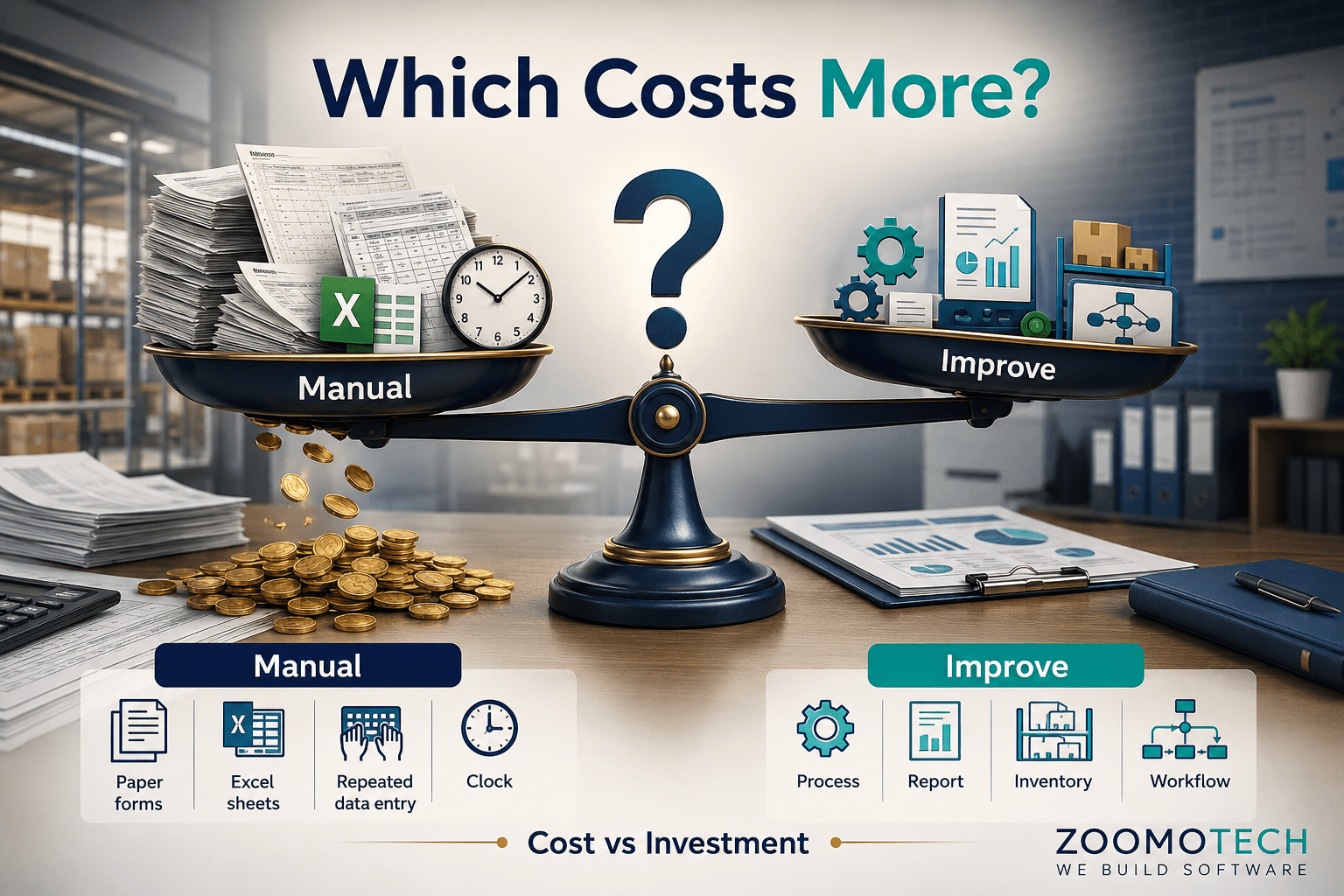
A useful exercise is to compare the annual cost of maintaining manual processes against the investment required to improve them. In some cases, the business is already spending more to maintain inefficient processes than it would cost to improve them, which is often the hidden reality behind manual business operations in growing SMEs. ERP Investment Planning becomes more effective when management evaluates both visible expenses and the less obvious costs of staying manual for another year.
Funding Options Are Broader Than Expected
Limited cash reserves do not automatically prevent improvement. Many owners assume a project must be fully funded from existing cash reserves before any work can begin. This assumption often delays decisions that could have generated operational savings much earlier.
Internal funding is only one of several possible options. Phased implementation can spread investment across multiple stages, reducing immediate financial pressure. Depending on the project type, financing facilities or funds available for SMEs through Bank Negara Malaysia may also be available. Good timing matters because funding opportunities change over time, and some programmes may only be available during specific application periods. When investment risk is distributed carefully, system improvements become more achievable than many SMEs initially believe.
How Operational Inefficiency Slows Your Growth Velocity
The long-term impact extends beyond daily operations. When managers spend most of their time checking reports, resolving inconsistencies, and following up on routine tasks, they have less time to focus on expansion, customer relationships, and future planning. Decisions are often made using information that is already outdated, causing business opportunities to pass before management can respond effectively.
As the company grows, these limitations become more expensive, especially when operational complexity increases faster than management control. Processes that worked for twenty staff may struggle to support fifty or one hundred. Staff frustration increases when manual work continues to expand, making retention more difficult. Over time, owners can become heavily dependent on manually prepared reports before making decisions. The consequence extends beyond operational inefficiency. It leads to slower growth, reduced flexibility, and less management control over the direction of the business.
Cash Preservation and Progress Need Balance
Good investment decisions are not about spending more or spending less. They are about making the right move at the right time with clear objectives and controlled risk. A phased approach allows businesses to learn before committing further, while clarity before commitment helps reduce costly mistakes. Progress and financial discipline do not need to compete with each other when decisions are made with long-term stability in mind.
Start Your First Modular Upgrade This Quarter
The objective is not to automate every process immediately. The more practical approach is to identify the one workflow that consumes the most time, creates the most errors, or delays cash collection. Waiting for the perfect financial moment often becomes another reason to postpone necessary improvements. Start with a manageable improvement, measure the outcome, and expand only when the results justify the next step. Cash Flow Issues should influence investment decisions, but they should not prevent sensible actions that strengthen the business over the long term. If you are unsure where to begin, consider discussing your current operational challenges with an experienced consultant via WhatsApp or Email to gain clarity on priorities, scope, and potential next steps before making any major investment decisions.
—
Ning
Founder, Zoomo Tech