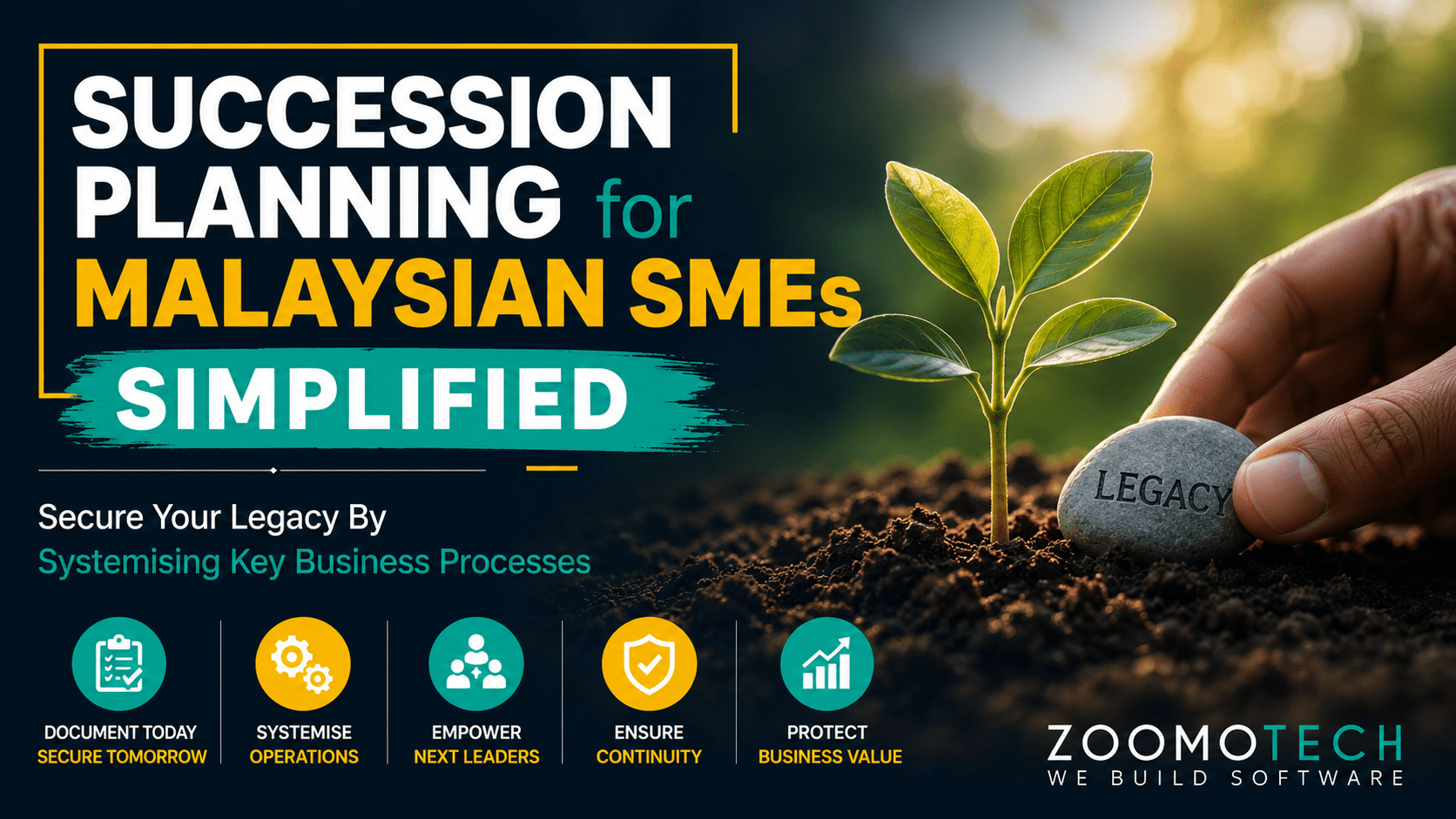
Many Malaysian SME owners quietly face the same problem. The company keeps growing, but daily decisions still depend on the founder. Purchase and production approvals wait for one person. Senior staff become the unofficial system. Younger management can handle meetings, but still hesitate during operational decisions. Retirement starts feeling uncertain even after twenty years of business growth.
Most owners reach this stage without a structured plan, realising that true leadership requires building a sustainable engine. Proper Succession Planning for Malaysian SMEs is less about finding a successor and more about creating a business that runs on clear, digital processes instead of the founder personal presence.
Succession Planning for Malaysian SMEs Starts Before Retirement
Succession Planning for Malaysian SMEs becomes more stable when daily operational decisions and workflows can continue without depending heavily on one founder or senior staff member.
- Transfer workflows, not only legal ownership
- Reduce dependency on verbal decisions
- Build consistent operational processes
- Prepare younger management gradually
- Maintain long-term business continuity
- Preserve company value after transition
Why Personal Experience Becomes a Business Bottleneck
Most Malaysian SMEs started with strong founder involvement. That approach often helped the company survive difficult early years. Founders personally handled customer relationships, pricing decisions, supplier negotiations, production planning, and staff coordination. Over time, that experience became the company’s “master key” stored inside memory instead of structured processes.
As the business grows, operations become more complicated. Staff may know how to perform tasks, but not fully understand the reasoning behind them. Manual coordination through WhatsApp, verbal instructions, spreadsheets, and paper records gradually makes operational handover more difficult. The business may continue growing, but daily decisions still depend heavily on founder judgement even after management layers expand.
Documenting Workflows to Ensure Business Continuity
Many founders believe their staff already understand daily operations because tasks continue moving every day. The problem usually appears only when experienced staff resign, retire, or become unavailable. Customer follow-up, production planning, stock coordination, pricing approvals, and exception handling often remain inside conversations, spreadsheets, and personal memory, especially in businesses already struggling with staff-dependent operational knowledge.
Documenting workflows creates operational clarity. Businesses begin understanding how information actually moves from sales order until delivery. Management can identify departments that depend too heavily on one person. Routine operational decisions become easier to explain, repeat, and standardise. More importantly, the company slowly builds a practical operational blueprint that future systems, reporting structures, and younger management teams can understand and continue operating confidently.
Why Software Architecture Protects Your Legacy
As businesses mature, operational history becomes too large to depend on memory alone. Staff changes, department expansion, and growing customer requirements gradually increase coordination pressure. Important records gradually become scattered across WhatsApp groups, emails, spreadsheets, printed forms, and different software platforms, creating the same problems commonly seen in fragmented business systems across departments. Over time, management loses confidence in whether important operational information remains complete or consistent.
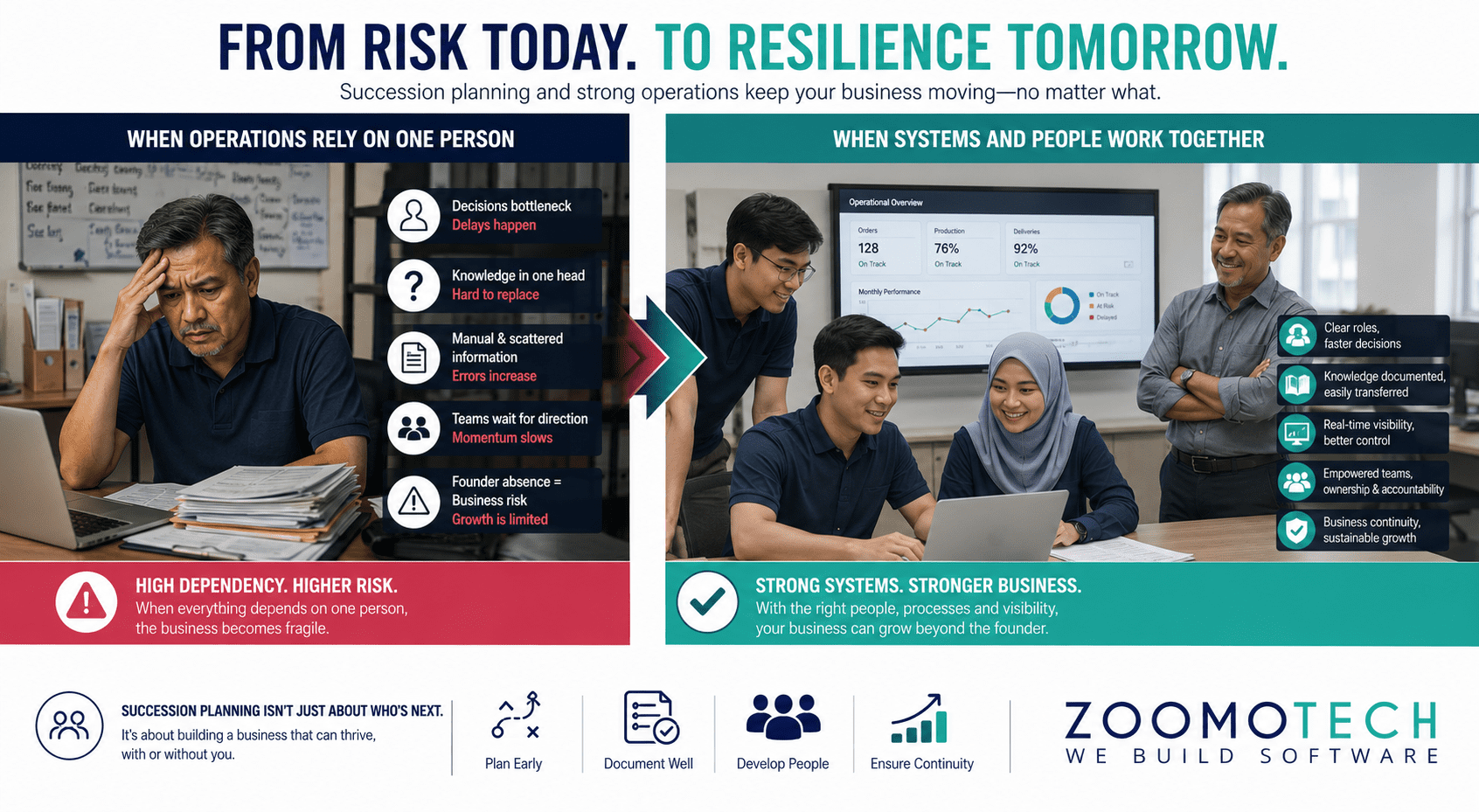
A properly designed business system helps preserve operational logic inside structured workflows instead of individual memory. Digital records help reduce long-term dependency on personal memory and verbal coordination. Automated reporting allows founders to monitor operations without checking every department personally. New staff can follow standard workflows more consistently. During leadership transition, the company retains operational continuity because information stays centralised instead of moving together with experienced employees.
Standardising Leadership Decisions Through Digital Systems
Many SMEs operate based on founder judgement developed over twenty years of experience. That knowledge is valuable, but daily decisions often become inconsistent when different managers interpret situations differently. Younger leaders may hesitate because they are unsure how decisions were previously made. Staff gradually depend more on personalities than consistent operational standards.
Digital systems help convert operational habits into measurable processes. Approval logic, reporting standards, production tracking, and operational targets become easier to follow consistently. Operational data creates more neutral and measurable reference points for management decisions. This reduces unnecessary management friction during leadership transition. Younger management teams gain clearer guidance while founders maintain confidence that important operational standards continue even when direct involvement gradually reduces over time.
Structured Systems Support Smoother Leadership Transition
Many SMEs struggle during system implementation because they attempt to replace everything at once. Large off-the-shelf ERP projects often introduce unnecessary complexity, especially when daily operations still rely heavily on founder involvement and the company has not clearly defined its actual workflow requirements before ERP implementation. Staff become overwhelmed, management loses confidence, and project momentum gradually slows before operational stability improves.
A more practical approach usually starts with operational core processes first. Sales coordination, reporting, approvals, purchasing, and production tracking can be stabilised gradually according to the founder’s transition timeline. Smaller implementation scopes often reduce operational disruption and delivery risk. Founders remain actively involved while the system matures. Younger management teams also gain faster operational understanding because workflows become structured before full leadership handover happens.
Protecting Company Valuation Through Digital Maturity
A business may generate stable revenue for many years, but company value becomes weaker when operations still depend heavily on the founder. Buyers, investors, successors, and professional managers usually look beyond profit figures. They also evaluate whether the company can continue operating consistently without relying on one individual’s personal involvement every day.
Structured systems strengthen operational confidence because workflows become more predictable and traceable, which aligns closely with internationally recognised business continuity management practices. Reporting consistency improves audit preparation, management review, and long-term planning. Operational digital maturity supports long-term business continuity. Companies with organised operational processes often attract stronger management talent because responsibilities become clearer. During succession planning, operational stability helps preserve both company value and management confidence across different generations.
Why Business Valuation Drops Without Digital Processes
Many founders assume company value comes mainly from revenue, customer base, or years in operation. Those factors are important, but long-term business value also depends on whether operations can continue consistently without direct founder involvement. When workflows remain manual, information becomes fragmented across staff, spreadsheets, printed documents, and personal communication habits, similar to the operational risks discussed in manual business reporting environments. Operational consistency gradually weakens whenever experienced employees leave or management transitions happen.
Businesses become harder to transfer without structured processes. Investors and successors usually prefer companies with stable operational systems because decision-making becomes easier to continue. Founder fatigue may eventually force rushed operational or retirement decisions before proper preparation takes place. Missing records, inconsistent reporting, and dependency on certain staff members increase operational uncertainty. Over time, customer confidence, management stability, and potential exit value may gradually reduce together.
Strong Businesses Transfer Process Not Just Ownership
A stable leadership transition does not require founders to lose control suddenly. Good operational structure allows business experience, standards, and decision-making habits to continue through consistent operational processes. Clarity before commitment reduces unnecessary disruption. Small, phased improvements often create stronger long-term continuity than rushing large operational changes near retirement.
Start Building Your System Before You Retire
Succession Planning for Malaysian SMEs becomes much easier when preparation starts before founders feel pressured to step away. Business continuity depends on whether operational knowledge can continue through structured processes instead of personal memory alone. Small operational improvements create long-term stability. Many companies begin by stabilising one department, one approval flow, or one reporting structure first. Over time, these practical steps reduce transition pressure while protecting years of business relationships, operational experience, and management effort built across different stages of growth.
Many founders already know something needs improvement, but are unsure where to begin. If you would like a quiet discussion about your current workflow situation, you may reach out to me through WhatsApp or Email. Sometimes a short operational discussion is already enough to identify the next practical step clearly without rushing into major operational changes.
—
Ning
Founder, Zoomo Tech