Daily operations still depend on Excel, WhatsApp, and staff memory. Reports take time, answers change, and decisions feel uncertain. Many owners feel pressure to Build Custom Software, yet workflows are still changing. Things are working, but not fully stable, and that uncertainty follows every key decision.
When Should You Not Build Custom Software?
You should not Build Custom Software when your operations are not stable or clearly defined yet:
- Workflows still change every week
- No fixed way of working across team
- Manual process still manageable
- Budget driven decision without clear ROI
- Key users cannot define requirements
Software Cannot Fix Broken Business Processes Quietly
Software follows clear rules. If the business logic is unclear, the system will still execute, but the outcome will not match reality. This is not a staff issue. It happens because manual work allows flexibility, while systems require a fixed structure from the start.
When a process is not stable, automation only speeds up the same mistakes. The system becomes a reflection of how the business currently operates. Before any system is built, the way of working must first be agreed and written clearly.
Build Custom Software Only When Workflows Stay Consistent
Custom systems work best on stable routines. If your team is still changing how things are done every month, development becomes a moving target. What you define today may no longer apply next month, and that creates rework.
Many SMEs already have an “Excel way” that works, even if it is manual. That method needs to be consistent first. When data entry and workflow steps are repeatable, build custom software becomes a way to lock in what is already working, instead of guessing what might work.
Staff Must Understand Current Manual Workflows First
Systems fail quietly when users do not understand their own work. If staff cannot explain why they perform certain steps, they will struggle to provide clear requirements. This leads to gaps during development and confusion after go-live.
A system only works when it reflects daily operations. Clean data does not start from the database, it starts with people. When staff understand their workflow clearly, training becomes easier, and adoption becomes natural instead of forced.
Why Unclear Requirements Increase Development Cost Over Time
Most cost overruns start before development even begins. When requirements are unclear, projects often move forward based on assumptions. As understanding improves later, changes become necessary and expensive.
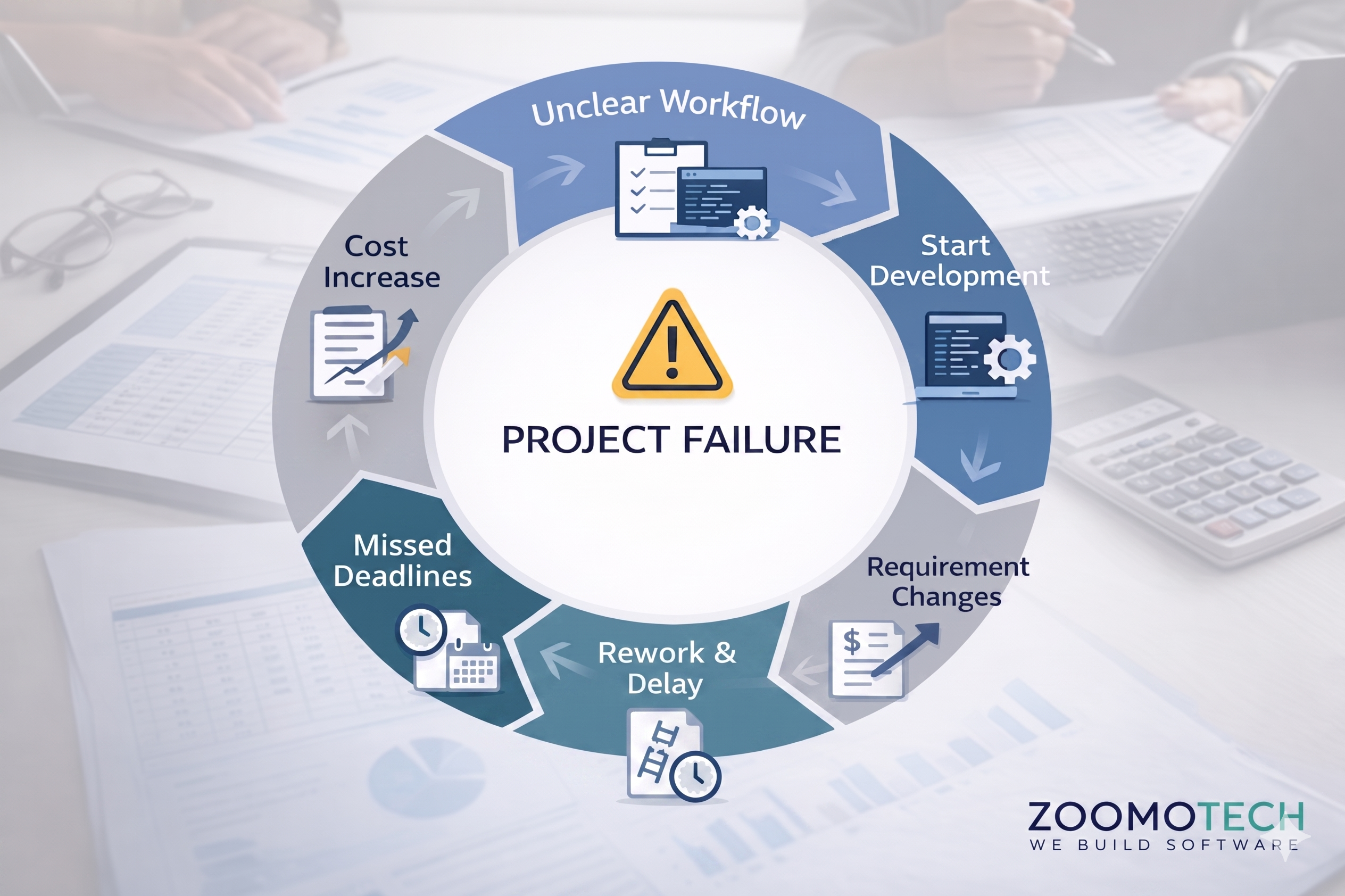
This “build while thinking” approach creates rework and delays. Many SMEs end up with systems that are almost complete but never fully usable in daily operations. A clear functional understanding at the beginning can prevent a large portion of future cost and frustration, especially when you understand why custom software cost in Malaysia varies so widely.
Managing Custom Software Development Cost Malaysia SMEs Face
The biggest cost is not development, but correction. When companies expect developers to figure out business logic, they are indirectly paying for trial and error. This increases both time and budget.
In many cases, being operationally ready can save a significant amount in revisions. Custom Software Development Cost Malaysia varies, but systems built on unclear thinking often cost more over time than expected, especially when projects lack proper project planning and scope definition practices. A phased approach allows better control over spending and reduces financial pressure.
Off-The-Shelf Tools Often Serve As Useful Stress Tests
Standard tools are not a limitation, they are a practical testing ground. Many SMEs overlook this step and jump straight into custom development. Simple tools can help reveal where real problems exist.
If a low-cost system already solves most of the workflow, there is no urgency to build. The real value of customisation lies in the gap that standard tools cannot handle, which is also why standard ERP software often does not fit growing SME workflows. Starting small allows you to validate needs before committing to a larger system.
Control Decreases When Systems Are Built On Assumptions
When systems do not reflect actual operations, management loses control slowly. Reports may look structured, but they no longer match what is happening on the ground. Owners start spending more time verifying numbers instead of making decisions.
A half-ready system often creates extra manual work, not less. Staff lose confidence when the system does not help them, and management begins to question the investment. Over time, this affects reporting accuracy, decision quality, and internal trust within the organisation, similar to how manual business operations quietly increase long-term cost.
Focus On Process Stability Before Choosing Technical Tools
A safer approach is to fix how work flows before digitising it. Start with clarity, not coding. When processes are stable and understood, systems become easier to design and adopt. A phased approach reduces risk, keeps cost under control, and ensures each step is based on actual operational needs.
Moving From Manual Bottlenecks Toward Strategic System Investment
The decision to Build Custom Software should come after clarity, not pressure. Take time to assess whether your workflows are stable and repeatable. Identify one bottleneck that manual work can no longer handle efficiently. When readiness is clear, system investment becomes a controlled step, instead of a risky move. The goal is not speed, but making the right decision at the right time.
If you are unsure whether your current operations are ready, it may help to talk it through first. You can reach out via WhatsApp or Email for a simple discussion. No commitment, just a practical conversation to understand your situation before deciding any next step.
—
Ning
Founder, Zoomo Tech