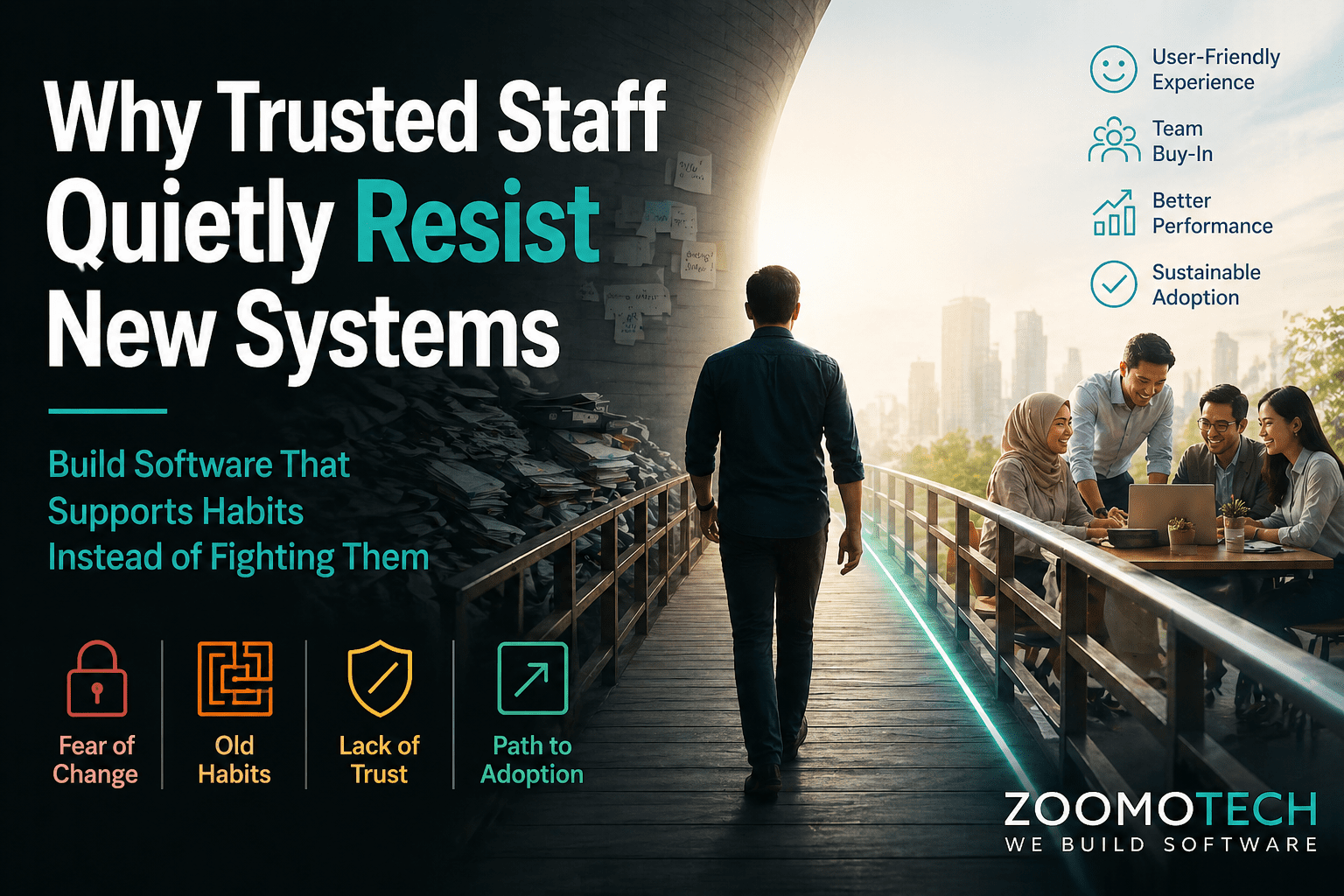
You introduce a new system, but your most trusted staff go quiet. They still follow old steps, avoid updates, and delay usage. This is where Staff Resistance to Change begins. When everything suddenly becomes more structured, the people who built your current workflow often feel exposed and not supported.
What Causes Staff Resistance to Change in SMEs
Staff Resistance to Change in SMEs usually comes from a mix of practical concerns and personal risk perception:
- Fear of job replacement by automation
- Increased accountability through system tracking
- Steep learning curve of new software
- No involvement during requirement discussion
Experience-Based Workflows Create Private Knowledge Islands
In many SMEs, senior staff carry operations in their head. They remember customer patterns, pricing exceptions, and daily decisions without needing formal records. This is not wrong. It is how the business survived and grew over the years. Manual tools also allow flexible handling that software cannot easily match.
Over time, shared files and informal practices start to feel like personal ownership. When a system is introduced, it shifts knowledge from individual memory into structured company data. This is where discomfort begins, especially when long-standing habits are suddenly made visible and standardised.
Fear of Increased Monitoring Triggers Defensive Behaviour
When a system starts tracking every action, bottlenecks become clear immediately. Management can see delays, errors, and who is responsible. For staff who are used to flexible handling, this feels uncomfortable. It shifts from general effort to measurable output.
This change often creates silent pressure. Mistakes now leave a clear record, and that creates fear of being judged. Resistance in this stage is not about refusing change. It is a natural defence against feeling exposed under a more structured environment.
Software That Ignores Daily Ground Reality Fails
Many systems fail not because they are wrong, but because they do not fit daily operations. A simple task that used to take one step may now require multiple inputs. When this happens, staff feel the system is slowing them down.
If the new process takes longer than the old way, people will quietly return to familiar habits. A system must solve a staff problem first, before it helps management. Inputting data should feel easier than writing on a whiteboard, not more complicated.
How Silently Ignoring the System Delays Project ROI
Resistance is often not loud. Staff may attend training, log in, and appear compliant. But behind the scenes, they continue using their own files or informal tracking methods. These “shadow systems” gradually disconnect the new system from actual operations.
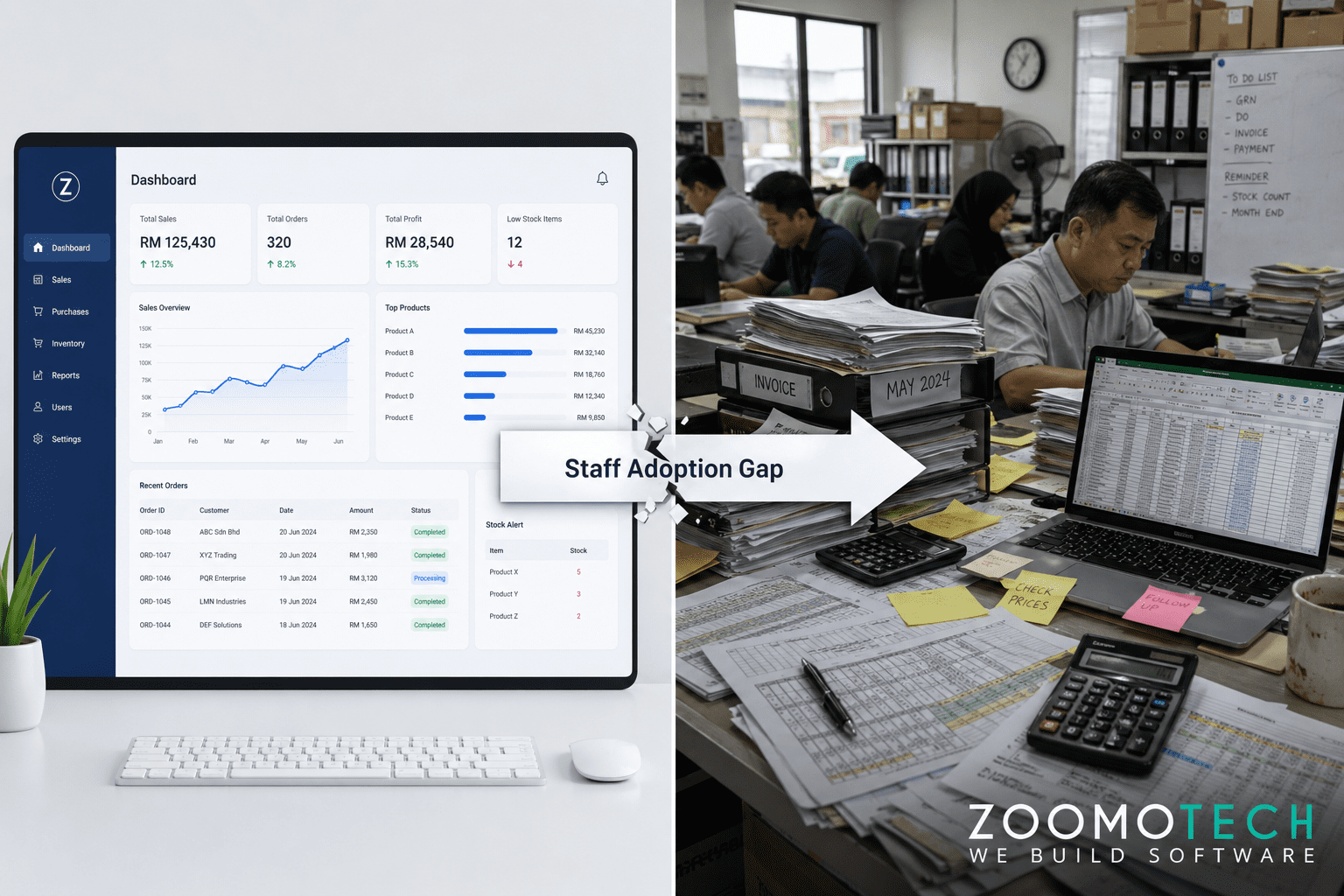
As a result, data becomes incomplete. Reports no longer reflect actual operations, and management begins to doubt the system. Double work increases quietly, as staff maintain both methods. Over time, this leads to fatigue, errors, and higher risk of staff leaving.
Custom Systems Must Respect Existing Cultural Habits
Changing everything at once creates unnecessary friction. Every company has its own rhythm, shaped by years of experience. Ignoring this and forcing a completely new structure often leads to pushback.
A better approach is to design systems that feel familiar from the first day of use. The flow should resemble existing habits, while gradually improving them. Involving key staff early reduces the feeling of being forced. When the system feels natural, resistance reduces without pressure.
Managing Staff Resistance to Change During Digital Shift
Managing resistance requires more than training sessions. Staff need to understand why the change is happening and how it helps their daily work. Without this clarity, the system feels like extra burden instead of support. Management should focus on a few practical actions:
- Explain clearly the purpose behind the change
- Position the system as reducing overtime and rework
- Allow space to learn without pressure
- Encourage early adopters to influence others
When people feel safe to adjust, adoption improves naturally. This reduces friction and prepares the business for a smoother transition into structured operations.
Unresolved Friction Increases System Implementation Challenges in Malaysia
When resistance is not managed early, the impact moves beyond staff behaviour into business risk. Go-live dates start slipping, and consultancy hours increase without clear progress, often stalling the National Policy on Industry 4.0 (Industry4WRD) objectives that many Malaysian manufacturers aim to achieve. What was planned as a structured rollout gradually turns into extended support and repeated rework.
At management level, the situation becomes more difficult. The MD is caught between vendor expectations and internal frustration. Low adoption prevents a single source of truth, and management decisions remain uncertain. Internal politics can quietly kill even a RM200k investment before real value is achieved.
Structure Should Support People Not Just Replace Them
A system should act as a steady partner to your best staff, not replace them. Good design removes repetitive tasks and keeps decision-making with people. Focus on best-fit logic, not perfect features. With a phased approach and clarity before commitment, change becomes manageable and risk stays controlled.
Building Systems That Your Team Actually Uses
When systems respect how people actually work, adoption improves and results follow. Staff Resistance to Change reduces when structure supports daily reality, not replaces it. Start by understanding your current operations clearly, then move in small, controlled scope. A phased, human-centred approach reduces risk and improves long-term return on investment.
If this situation feels familiar in your company, it may help to talk it through. You can reach out via WhatsApp or Email for a private discussion. No pressure, just a practical conversation to see if your situation is suitable to move forward.
—
Ning
Founder, Zoomo Tech