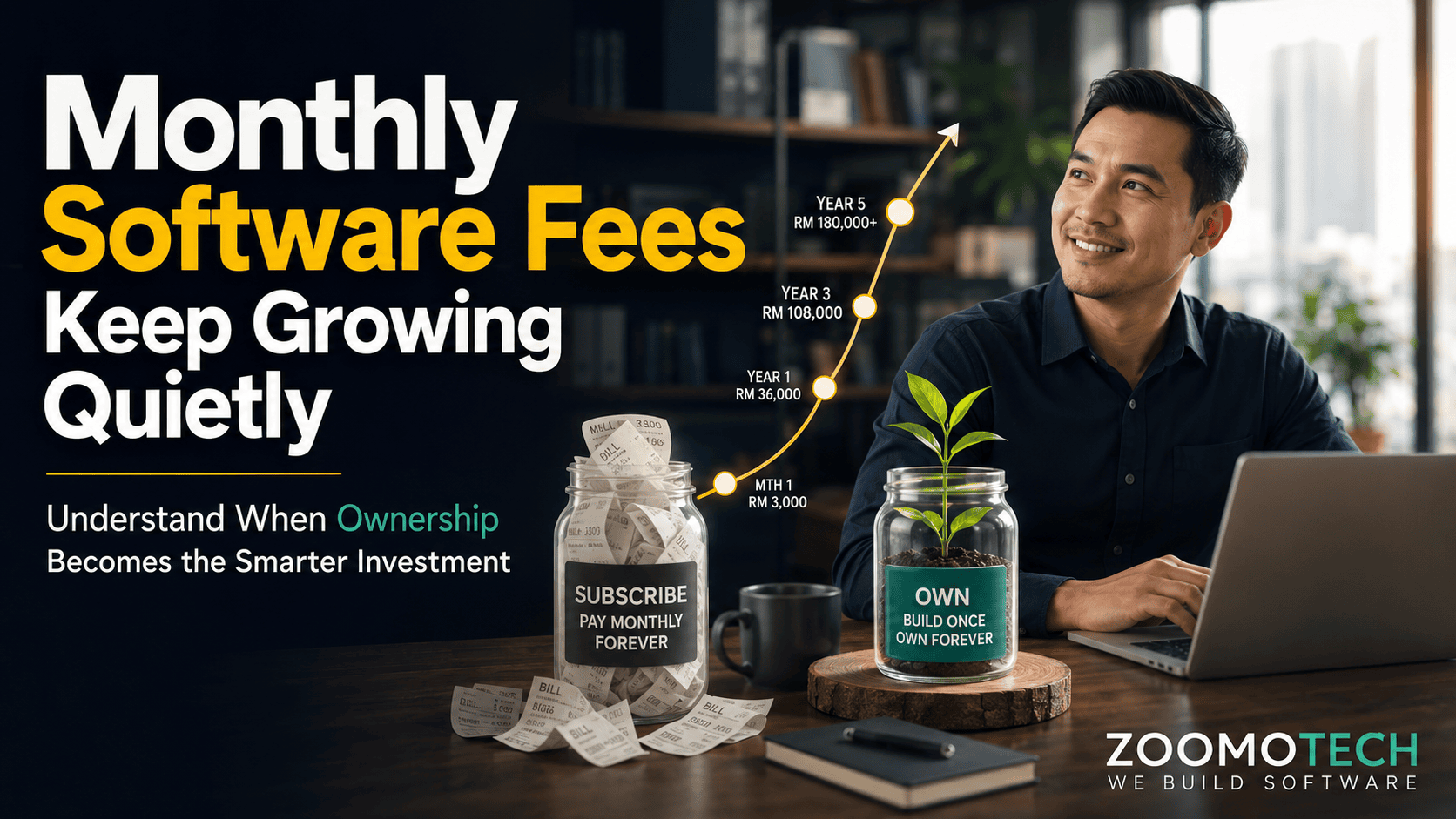
Monthly subscriptions usually feel manageable when your company only uses a few software systems. As the business grows, more users, more departments and more functions slowly add new monthly charges. Own Custom Software is seldom considered because each individual payment still looks reasonable.
Many established Malaysian SMEs only notice the pattern after five to ten years of growth, when they review how much they have spent without actually owning a long-term business asset. It is a familiar situation that prompts many business owners to pause and ask whether there is now a better way forward.
Should You Own Custom Software or Keep Subscribing?
The right choice depends on your business size, operational complexity and long-term financial planning. Own Custom Software generally suits established SMEs with stable workflows, while subscriptions remain practical for smaller or fast-changing businesses.
- Small businesses often prefer OPEX for flexibility.
- Growing SMEs may benefit from CAPEX ownership.
- Review your five to ten-year total spending.
- Decide based on business needs, not software pricing alone.
Software Subscription Cost Grows Alongside Business Expansion
Many subscription software platforms are designed to grow together with your business, so higher monthly spending is often a normal result rather than a pricing problem. As your company expands, more employees need user accounts, additional departments request new modules, and system integration or premium support may become necessary.
Each additional subscription often looks reasonable on its own, making the overall increase easy to overlook. During annual budget reviews, however, many business owners discover that recurring commitments have increased far beyond the original subscription. This is often the point where companies stop looking only at monthly affordability and begin evaluating whether software should become a long-term business asset instead.
Own Custom Software Creates Long Term Business Assets
Many business owners view software as another operating expense, yet a well-designed custom system can become a long-term business asset. This long-term thinking also aligns with ISO 55000 Asset Management, which encourages organisations to manage assets throughout their lifecycle. It reflects how your company actually operates, rather than requiring your business to adapt to a standard software product. Business rules remain within your organisation, allowing improvements to follow your own priorities instead of someone else’s product roadmap.
As operations expand, the system grows together with your business instead of waiting for the next subscription package. Unlike increasing Software Subscription Cost, every enhancement adds value to an asset your company continues to own. The investment supports daily operations, preserves business knowledge and delivers benefits long after the original development is completed.
Business Growth Changes Your Software Investment Strategy
Most companies begin by choosing software that is quick to implement and easy to pay for every month. That approach usually makes sense during the early years when the business is still experimenting with products, services and operating methods.
As an SME becomes more established, priorities often change. Production processes, approval flows and reporting methods become more specialised because they reflect years of operational experience. These unique workflows often become part of the company’s competitive advantage, making ownership a more suitable investment strategy than relying solely on software packages designed for the general market. Many established SMEs eventually discover that standard software no longer matches their unique business workflow as operations become more specialised.
Vendor Dependency Gradually Limits Business Flexibility
Subscription software providers naturally improve their products according to market demand. Sometimes prices increase, certain features disappear, while support policies change as the vendor adjusts its business strategy. These decisions are commercially reasonable for the vendor, but they may not always match your company’s long-term operational priorities.
Over time, changing to another platform can become more difficult as data, staff training and integrations become closely connected to the existing system. The longer the company waits, the higher the migration effort usually becomes. This gradual dependency often goes unnoticed until a major business decision forces management to reconsider its options.
CAPEX Decisions Often Produce Better Long-Term Returns
A monthly subscription belongs to operating expenditure (OPEX) because the payment continues as long as the software remains in use. Developing a custom system is normally treated as capital expenditure (CAPEX) because the investment is intended to support business operations over many years.
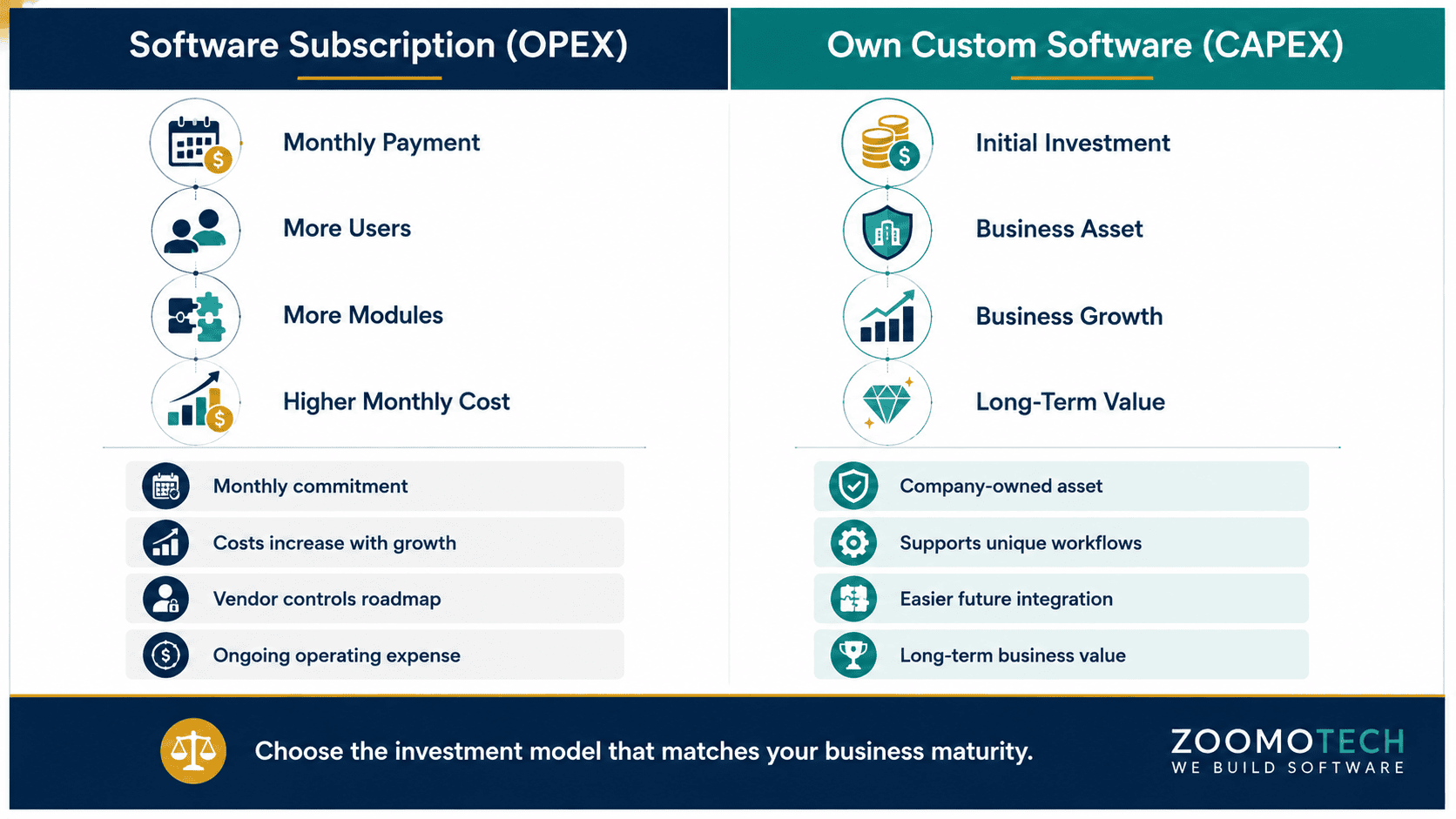
For established SMEs with stable workflows, predictable ownership can provide greater certainty for long-term financial planning than increasing recurring payments. When management compares Software Subscription Cost over a five to ten-year period, the discussion becomes less about monthly affordability and more about total investment, depreciation and long-term company value. Understanding how custom software costs are determined helps owners evaluate investment decisions more objectively.
Ownership Supports Better Integration Across Future Systems
Most business software does not operate in isolation. As companies grow, they often need accounting systems, production planning, warehouse management, customer portals and mobile applications to work together without creating duplicate work for employees.
Owning the core system gives the business greater freedom to expand according to operational priorities instead of platform limitations. New modules and API integrations can be planned around existing workflows, so the digital environment continues developing as the company grows. The technology continues supporting the business, rather than determining how the business should operate.
Recurring Expenses Quietly Reduce Future Investment Capacity
Each recurring software payment may appear reasonable on its own, but together they become long-term financial commitments that compete with future business priorities. Cash commitments gradually increase, leaving less room for factory upgrades, additional machinery, new product development or business expansion.
From a management perspective, technology decisions are no longer just IT decisions because they directly influence profitability and capital planning. Owners should compare lifetime cost instead of monthly cost, especially when the business has reached a stable stage of growth. Looking beyond today’s subscription bill often leads to better long-term investment decisions that strengthen the company over the next five to ten years.
Software Should Become Part of Your Business Value
Good software decisions begin with clear thinking, not immediate implementation. Build digital assets gradually, match each investment to your company’s business maturity, and plan with a ten-year perspective. A phased approach, clarity before commitment, and careful risk control often produce stronger long-term results than trying to solve every problem at once. This approach also helps businesses avoid common ERP project mistakes before committing to major investments.
Choose the Investment Model Before Choosing Technology
Good technology decisions begin with business strategy, not software features. Own Custom Software is not always the right answer because every company has different priorities, budgets and stages of growth. The better approach is to evaluate your business maturity, compare lifetime costs objectively, and select an investment model that continues supporting your business as it grows rather than simply solving today’s operational needs.
If this article reflects your current situation, feel free to reach out via WhatsApp or Email if you would like to discuss your business privately. There is no obligation to proceed. Sometimes a short conversation is enough to help clarify the next practical step for your company.
—
Ning
Founder, Zoomo Tech