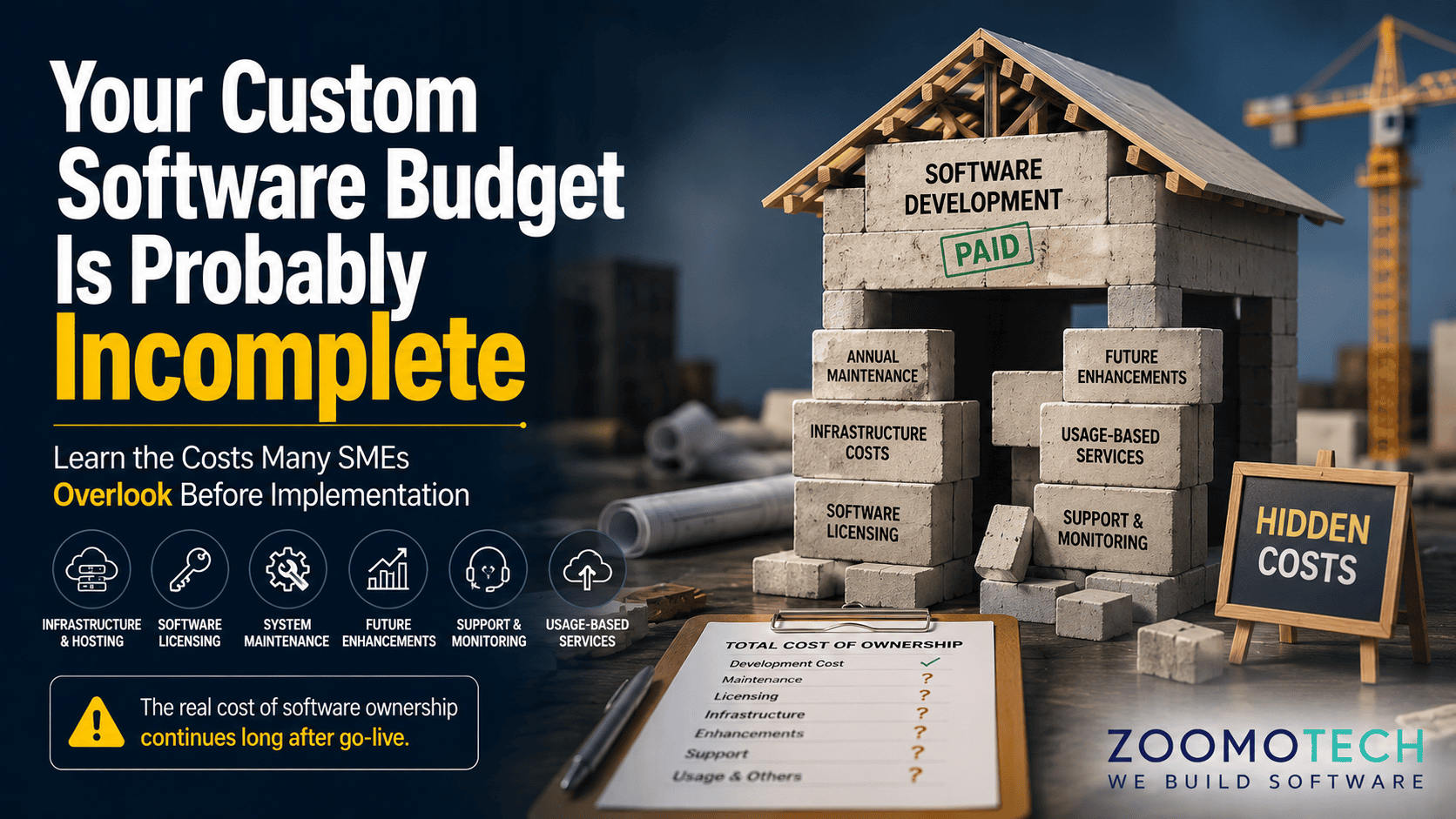
The quotation looks reasonable until the system goes live and new expenses begin appearing one after another. Many SME owners approve a project believing the biggest investment is already behind them. Months later, they discover the Custom Software Maintenance Cost, cloud server hosting, software licences and other ongoing operating expenses were never part of their original budgeting discussion.
This situation is common across Malaysian SMEs, especially companies moving away from manual processes or Excel-based operations. These expenses are often genuine business requirements rather than hidden charges from the software vendor. The real challenge begins when the business treats software as a completed project instead of something it will continue to own, maintain and rely on for many years.
What Is Custom Software Maintenance Cost
Custom Software Maintenance Cost is the ongoing investment required to keep a business system secure, stable and compatible after deployment, and it normally includes:
- Corrective maintenance to fix software defects.
- Preventive maintenance to improve stability and security.
- Adaptive maintenance to support technology or operating environment changes.
- Ongoing support for business continuity.
- Future enhancements are usually quoted separately.
Software Goes Live but Costs Continue Every Year
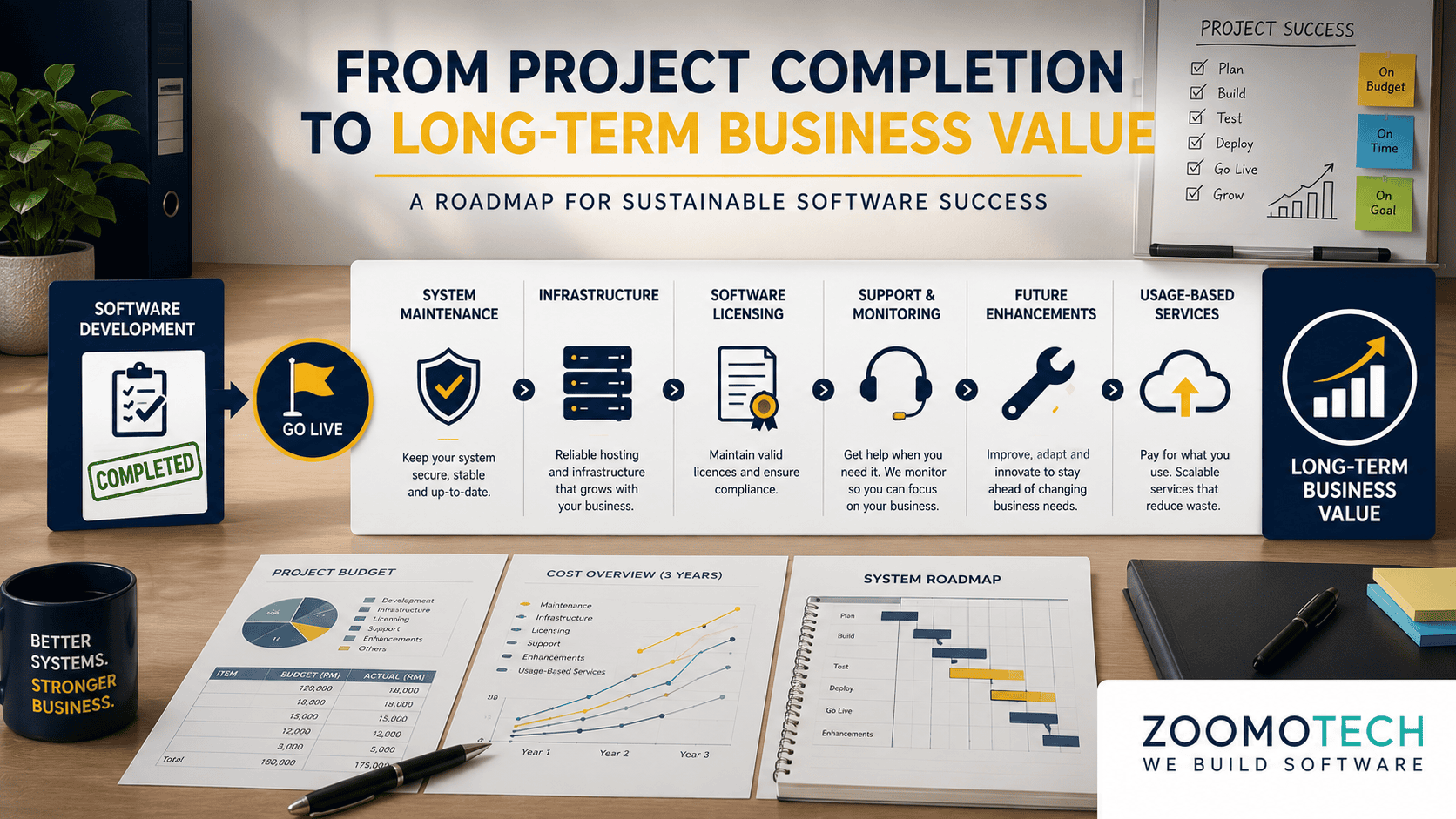
Software deployment is not the finish line. It marks the beginning of system ownership. Every business system depends on technology infrastructure that requires ongoing care, while security risks, operating systems and supporting technologies continue changing over time. These are normal parts of owning business software, not unexpected problems.
Business requirements also change as companies expand, introduce new products or adjust internal workflows. A system that remains unchanged gradually becomes less suitable for daily operations. Ongoing investment protects your original investment, helping the software continue supporting daily operations instead of becoming another outdated system that eventually requires replacement.
Infrastructure Expenses Grow Beyond Your Initial Budget
Infrastructure continues supporting daily operations long after software development is completed. Whether you choose cloud hosting or an on-premises server, there are ongoing costs that support daily operations. A backup internet connection helps reduce downtime, while domain renewal, SSL certificates and backup storage protect business continuity and customer confidence.
Many SMEs overlook these expenses because they are not software features. They are supporting services that keep the software available, secure and accessible every day. Planning for them early prevents unnecessary budget adjustments after the system goes live. This is one reason why Custom Software Cost in Malaysia varies more than many business owners expect.
Licensing Decisions Influence Long Term Operating Expenses
Software licences deserve careful planning because different technology choices create different long-term commitments. For example, SQL Server and Windows Server may require licence purchases, while Linux may reduce operating costs for suitable environments. Some reporting tools and third-party APIs also introduce annual subscription fees.
The objective is not simply to choose the cheapest option. It is to select technology that matches your operational needs, expected growth and available budget. A balanced decision today often prevents higher operating expenses over the next several years.
System Maintenance Fee Covers More Than Bug Fixes
Many owners assume a System Maintenance Fee only covers fixing software problems. In most cases, it includes preventive maintenance, security patching, system monitoring, backup verification, technical support and performance tuning to keep daily operations stable.
Without a proper System Maintenance Fee, small issues can gradually become larger operational problems. Regular maintenance also reduces security risks and helps ensure the system continues working reliably after browser updates, operating system upgrades or infrastructure changes. Keeping systems updated with security patches is also widely recognised as a fundamental cybersecurity best practice.
Business Growth Creates Future Enhancement Requirements
Business growth changes software requirements. New departments, additional workflows and customer expectations often develop over several years. Regulatory requirements may also change, while management requests new reports or approval processes that did not exist during the original implementation.
These changes do not mean the earlier project failed. In many cases, they simply reflect the natural evolution of your unique operation workflow along with the continuously growing business. A well-designed custom system should allow future enhancements without requiring the company to replace the entire solution every time operations become more complex.
Usage Based Services Increase Operating Expenses Gradually
Some costs depend on actual usage instead of fixed monthly charges. WhatsApp messages, SMS notifications, email gateways, payment gateways, AI API services and cloud storage usually increase as transaction volume grows and more staffs and customers use the system.
These expenses are often small during the early stages, but they become more noticeable as transaction volumes and business operational activities increase. Including them in long-term budgeting important to help management understand the true ownership cost of a business system and reduces unexpected financial pressure later.
Typical One-Time and Ongoing Software Ownership Costs
| Cost Category | One-time Cost | Ongoing Cost |
| Software Development: | ✓ | – |
| Cloud Hosting / Physical Server: | Optional | ✓ |
| Domain & SSL Certificate: | – | ✓ |
| SQL Server / Windows Server Licence: | Depends | Optional |
| BI Dashboard Licence: | Depends | Optional |
| Software Maintenance: | – | ✓ |
| Future Enhancement: | ✓ | – |
| WhatsApp, SMS & Email Gateway: | – | ✓ |
| Payment Gateway Charges: | – | ✓ |
| Backup Storage: | – | ✓ |
Incomplete Budgets Often Delay Business Improvement Plans
Budget gaps affect more than project costs. When ongoing expenses are overlooked, management may need to revise budgets, postpone implementation phases or reduce the original project scope. These decisions can disrupt cashflow planning and lower user confidence because the expected improvements take longer to materialise.
The bigger concern is management confidence. When software investments repeatedly require unexpected funding, future technology initiatives become harder to approve. Careful budgeting from the beginning allows business improvements to progress steadily, helping management make long-term decisions with greater financial confidence instead of reacting to avoidable surprises.
Budget for Ownership Instead of Project Delivery Alone
A good software investment starts with clear planning. Think five years ahead by separating CAPEX from OPEX, reviewing the full lifecycle cost and planning improvements in phases. Clarity before commitment and risk control help businesses make sustainable decisions while reducing unnecessary financial surprises over the next five years.
Build Software with Long Term Financial Confidence
Every custom software project has its own ownership journey. Looking beyond development cost helps management prepare for the complete ownership lifecycle instead of reacting to unexpected expenses later. Planning early, budgeting realistically and reviewing lifecycle costs create stronger decisions and reduce long-term business risk. Custom Software Maintenance Cost should therefore be viewed as one part of a broader ownership strategy rather than an isolated expense, allowing each investment to continue supporting the business for many years.Still comparing different options? If you would like a second opinion before making a decision, feel free to reach out via WhatsApp or Email. Whether you continue with your current plan or simply want an independent perspective, I’m always happy to share my thoughts without any obligation.
—
Ning
Founder, Zoomo Tech