Why Cheap Servers Often Become Expensive Business Decisions
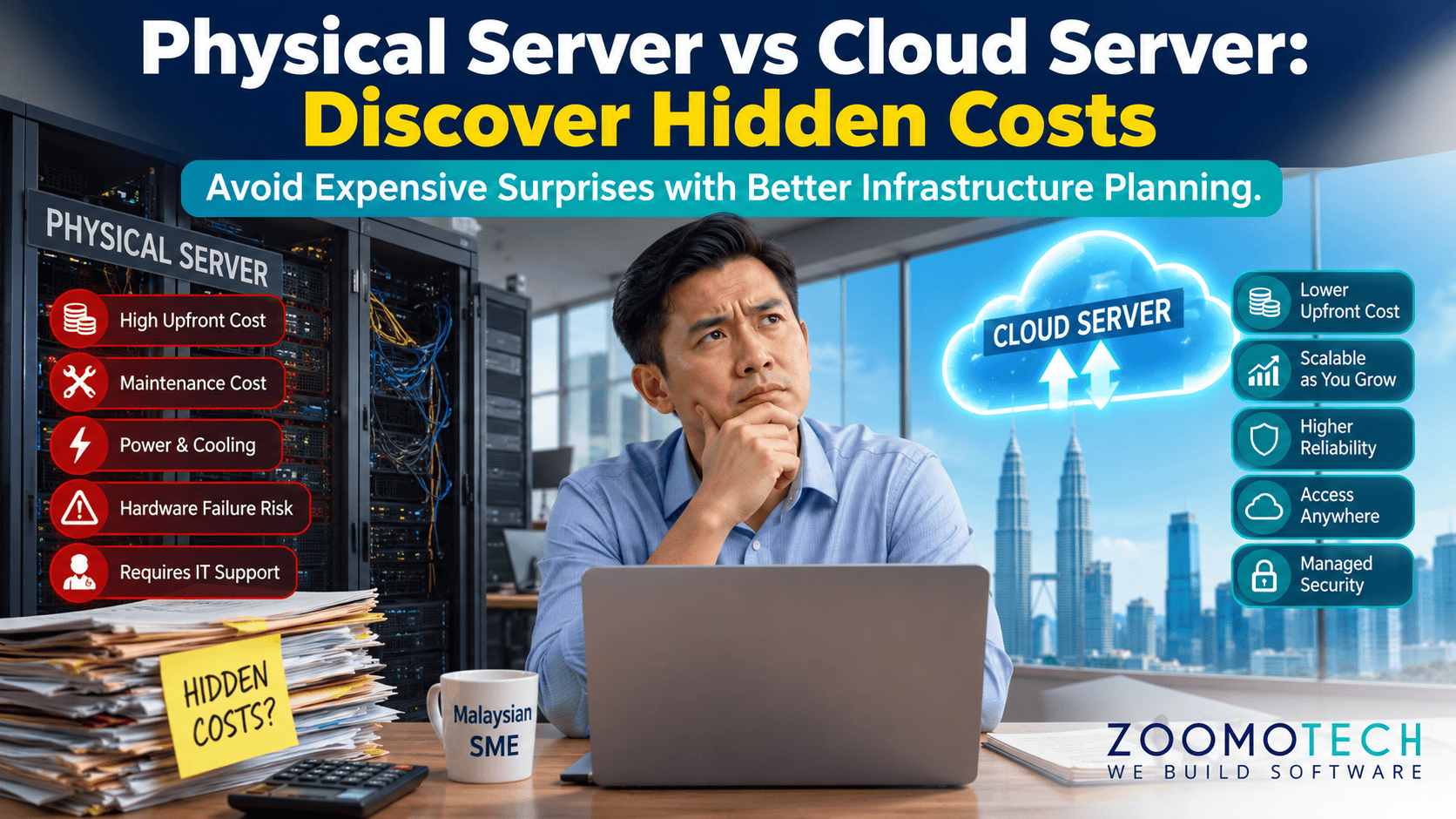
The quotation looks affordable. Many Malaysian SME owners compare Physical Server vs Cloud Server by looking at the monthly cloud fee against the price of buying a computer that they think can act as a server. The monthly fee often feels expensive, while owning a Physical Server appears to be a one-time purchase. That first impression is very common.
A few months later, new expenses begin to appear. Software licences, internet setup, maintenance, hardware upgrades and unexpected repairs slowly add to the overall cost. Most growing SMEs do not overlook these items on purpose. They simply make the decision based on the purchase price. The long-term cost of operating the system only becomes clear later.
Physical Server vs Cloud Server for Growing Malaysian SMEs
Physical Server vs Cloud Server is a choice between owning your own server infrastructure or renting cloud resources, where the better option depends on your business needs and long-term ownership cost.
- Physical Server suits businesses with dedicated IT resources.
- Cloud Server suits SMEs seeking predictable monthly costs.
- Physical Server is mainly CAPEX.
- Cloud Server is mainly OPEX.
- The hardware purchase price is only part of the total ownership cost.
Buying Hardware Is Only the Beginning
A business system never stops working. SME owners always focus on the Physical Server because it is the most visible purchase. That is completely understandable. Hardware is easy to compare. Supporting infrastructure receives far less attention because the costs are not immediately visible. Yet a business system depends on much more than the server itself to run reliably every day.
Internet connectivity, software licences, backups, security updates and ongoing maintenance all work together to keep daily operations running. Each component supports the others, so overlooking one often affects the reliability of the whole business system. When one part is overlooked, the impact often reaches production, sales or customer service. The purchase price stays the same, but the total cost continues to grow throughout the server’s working life.
Server Ownership Cost Continues After Installation
Buying the server is only the first payment. Many SMEs discover this only after the system goes live. Server Ownership Cost includes much more than the hardware itself. Windows Server licences, Database Server licences, warranty renewals, replacement parts and regular maintenance become ongoing responsibilities. Many of these expenses also form part of the broader software infrastructure cost, which many SMEs only begin to appreciate after the system has been running for some time.
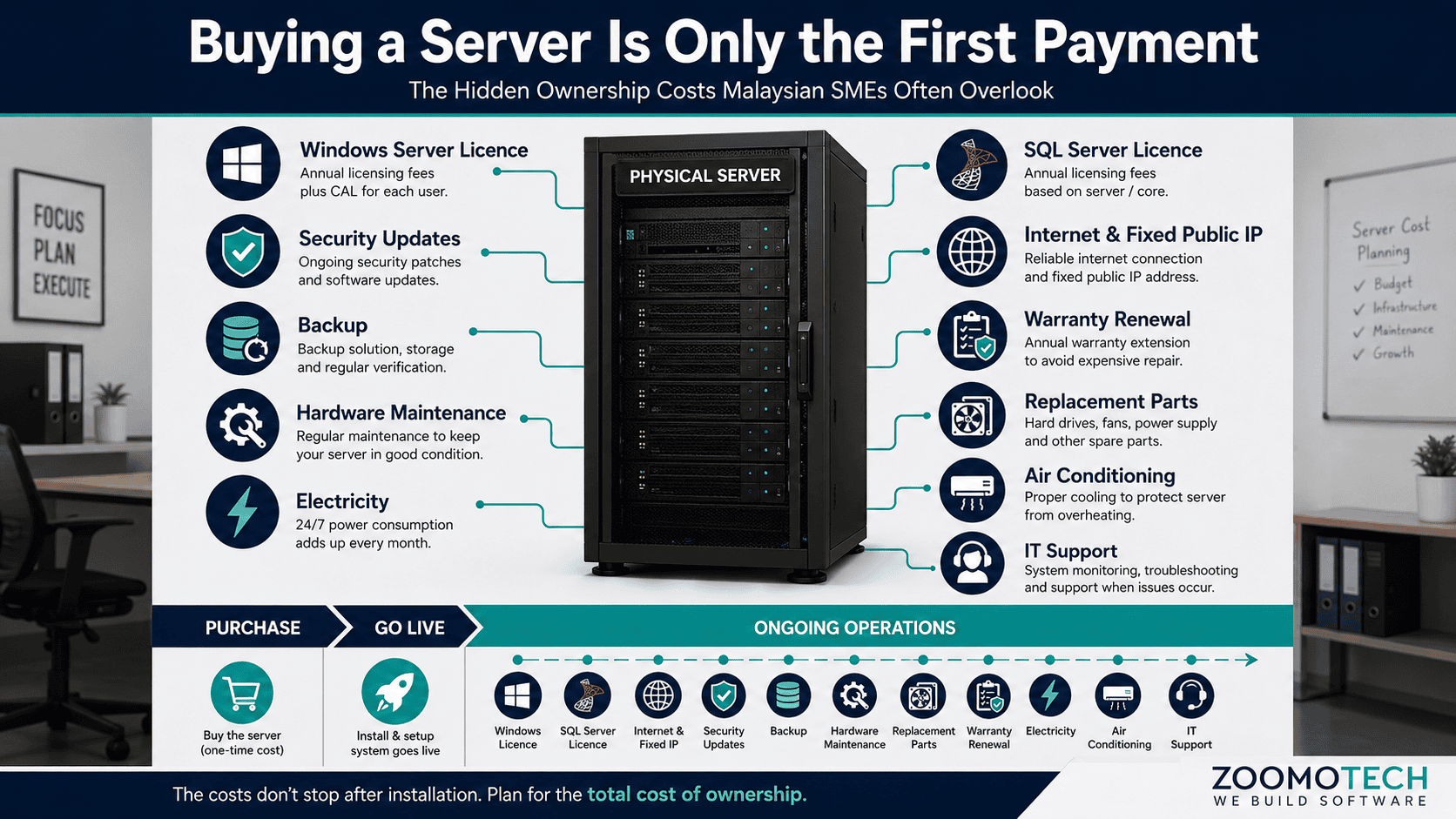
Electricity and air conditioning also run every day because servers perform best in a stable and non-overheat environment. None of these costs usually arrive together. Instead, they appear gradually over several years, making the original purchase seem much cheaper than the actual long-term investment.
Internet Reliability Determines Daily Business Operations
Reliable internet becomes part of your infrastructure. Many businesses focus on the server but overlook the network supporting it. Staff working from home, travelling sales teams and multiple branches all depend on stable access to the server. A Dynamic IP can make remote access less reliable, while a Fixed Public IP and VPN often require additional setup and monthly fees.
When the internet connection becomes unstable or the ISP experiences an outage, business operations may slow down or stop completely. The server may still be running, but staff cannot always reach the system when they need it most. For businesses with remote staff or multiple branches, this can interrupt normal operations even when the server itself is working properly.
Business Growth Changes Infrastructure Requirements Gradually
Business growth changes technical needs. A server that performs well today may struggle a few years later. More employees, larger databases and higher transaction volumes gradually consume storage, memory and processing power. Upgrading RAM or replacing processors is not always as simple as adding new parts, especially when older hardware has reached its limits.
Some upgrades also require planned downtime, affecting daily operations. For manufacturers, logistics companies and service businesses, even a short interruption can delay normal work. Cloud infrastructure generally allows businesses to increase storage, memory or processing resources much more easily, helping systems keep pace with business growth without replacing the entire server.
Hardware Problems Become Business Problems Quickly
Small hardware faults can spread quickly. Hard disks out of space, power supplies fail and motherboards can develop faults after years of continuous use. These components naturally wear over time because business servers often run 24 hours a day. The real challenge begins when the business depends on that single machine for daily work.
Without proper monitoring and a clear recovery plan, even a small hardware issue can stop production, delay deliveries or interrupt customer service. Server Ownership Cost also includes preparing for failures before they happen, not only fixing them afterwards.
Dedicated IT Support Is Often Still Necessary
Servers still need regular attention. Owning a physical server does not remove the need for ongoing technical work. Security updates, backup verification, performance checks and system monitoring all require ongoing attention from the IT Department. Ignoring these tasks increases the likelihood of unexpected interruptions later.
Many established SMEs do not employ a full-time IT team because it is difficult to justify the cost. This is also why many businesses underestimate their future custom software maintenance cost. As the business grows, someone still needs to maintain the server, respond to incidents and keep the system operating reliably. This responsibility should be considered before deciding whether a Physical Server or Cloud Server best fits the business.
Large Upfront Spending Reduces Business Flexibility
Technology decisions also affect cash flow. From a management perspective, buying a physical server is not only an IT purchase. It is a CAPEX commitment that ties up working capital from the beginning. The return on investment may take years, while future upgrades or hardware replacement remain difficult to predict. This reduces financial flexibility when new business opportunities or unexpected expenses arise.
Every Ringgit invested in server infrastructure also represents an opportunity cost. It cannot be used for hiring, expanding production, marketing or developing new products. These investment trade-offs should be evaluated using ISO 31000 Risk Management Guidelines as part of structured business decision-making. Business owners should evaluate the total business impact, not simply compare the hardware price with a monthly cloud subscription.
Choose Infrastructure That Matches Your Business Size
Every business has different priorities. There is no single answer that fits every company. A physical server remains a sensible choice for organisations with strict data custody policies, regulatory requirements, dedicated internal IT departments or substantial existing physical infrastructure of the company. It may also be appropriate where higher than standard security controls or enterprise operating environments are required.
For many growing Malaysian SMEs without a dedicated IT team, the simplest solution is often the most practical one. Choosing the right infrastructure should also be part of your overall business system investment planning. Good decisions begin with clarity before commitment, followed by a phased approach that manages business risk while supporting future growth, instead of investing more infrastructure than the business actually needs.
Build Business Systems Around Long Term Practicality
A server should support business growth, not create unexpected commitments. Before making a decision, review the total ownership cost, assess your internal IT capability and consider how your operations and workforce may grow over the next few years. Physical Server vs Cloud Server is not simply a technology comparison. It is a business decision that affects cash flow, day-to-day operations and future flexibility, so it deserves careful evaluation before any investment is made.
Not sure which option suits your business? If you would like a second opinion before investing, feel free to reach out via WhatsApp or Email. I’m always happy to discuss your situation, answer your questions and share practical recommendations, with no obligation to proceed.
—
Ning
Founder, Zoomo Tech